Skip to content

Leading the Charge:
How Akkodis and Mercedes-AMG PETRONAS Formula One Team turn Talent Into Performance

22 July 2026
12 Min Read

From 4,000 applicants to real-world impact — inside the global talent programme built on technology, innovation and sustainability.

A key pillar of the partnership is Akkodis Lead the Charge, a global talent programme designed to connect next-generation talent with one of the most advanced engineering environments in the world, while applying technology and data to real-world sustainability challenges.

Since 2022, the Mercedes-AMG PETRONAS Formula One Team and Akkodis have built a strategic partnership rooted in a shared commitment to technology, innovation, and sustainability, extending a collaboration that began with the Mercedes-EQ Formula E Team.

Together, both organizations have actively advanced the team’s sustainability agenda, supporting its ongoing ambition to achieve carbon neutrality. Akkodis is also one of the founding members of the Mercedes-AMG PETRONAS F1 Team’s sustainability working group, helping to shape the broader direction of sustainability across the partnership.

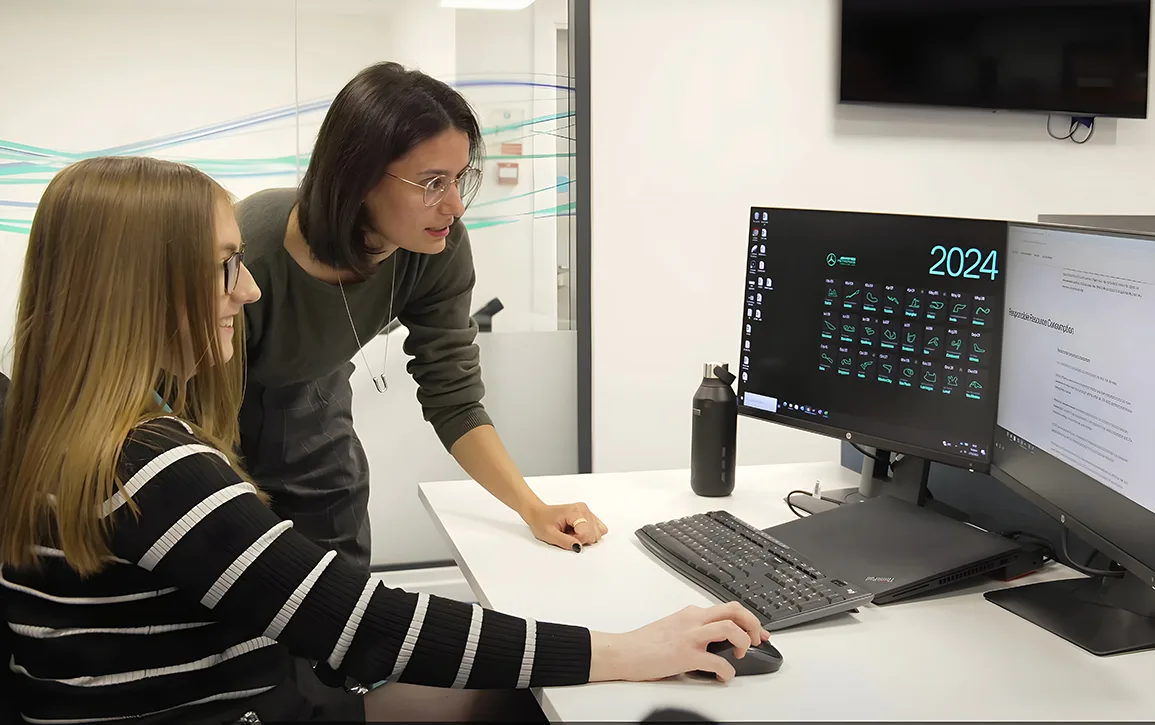
The initiative offers selected candidates a paid internship at the team’s Brackley headquarters, where they gain hands-on experience developing sustainable solutions that directly support the team’s operational and environmental goals. To date, three candidates have completed the programme, with one transitioning into a full-time role within the team’s sustainability department, a tangible indicator of its impact. Beyond career outcomes, the programme has delivered measurable results, contributing meaningfully to the team’s sustainability efforts while creating a unique entry point for emerging talent.

Why Lead the Charge?

From the start, Akkodis Lead the Charge has been integral to the Akkodis and Mercedes-AMG PETRONAS F1 Team partnership, as the intent was to create a program with purpose.

“We built it in from the very start. It was important on both sides to foster STEM careers. The partnership itself is about the intersection of technology and innovation, and we have a large global audience of talent we want to attract, this was a natural fit.”

Maria Bergving — Global SVP Brand and Marketing, Akkodis

The programme also reflects the evolution of the partnership from Formula E into Formula One, carrying forward a strong sustainability narrative. “This is our fifth year in F1, with an initial overlap with Formula E,” Bergving adds. “The programme allows us to extend the sustainability journey, particularly in the context of broader industry shifts, including new F1 power unit regulations.”

As sustainability has become a sharper priority across motorsport, the programme has evolved alongside it.

“We were looking for a way to give young talent the opportunity to join a highperformance environment, while connecting it to something that matters. What became clear very quickly was the role of sustainability, and how technology can enable real progress. When we started, the link between sustainability and motorsport was still emerging. Today it’s firmly established. Through this programme, we’ve actively supported that shift, demonstrating how technology can drive better outcomes for both the team and the wider industry.”

Jasmin Opel — VP Global Brand, Partnerships and Audience Engagement, Akkodis

Assessing global talent

Akkodis’ global network has been critical in sourcing talent at scale, attracting more than 4,000 applicants from 99 countries in the last program cycle.

“We worked closely with Akkodis to define the ideal candidate profile. Sustainability in this context is highly technical, it requires strong analytical capabilities to turn data into actionable insight.”

Alice Ashpitel — Head of Sustainability, Mercedes-AMG PETRONAS F1 Team

Candidates are sourced from a broad range of backgrounds, from university students to early-career professionals. The selection process combines technical and behavioural assessment, with shortlisted candidates progressing through virtual assessment centres, solving complex challenges in real time, before final interviews focused on motivation, mindset and long-term potential.

“What stood out was the diversity of perspectives,” Ashpitel notes. “Candidates approached the same challenges in very different ways. But ultimately, it was their passion for sustainability and ability to thrive in a high-performance environment that mattered most.”

This diversity has proven to be a strength, enabling the team to approach challenges from multiple angles, combining technical, behavioural and operational perspectives.

“There isn’t a single pathway into sustainability,” Ashpitel adds. “What matters is analytical capability and the ability to apply it in different contexts.”

As the selection process progresses, these differences become increasingly visible. “Beyond strong CVs, what distinguishes candidates is curiosity, energy and a genuine desire to make an impact.”

The successful candidates — meet the Charge Leaders

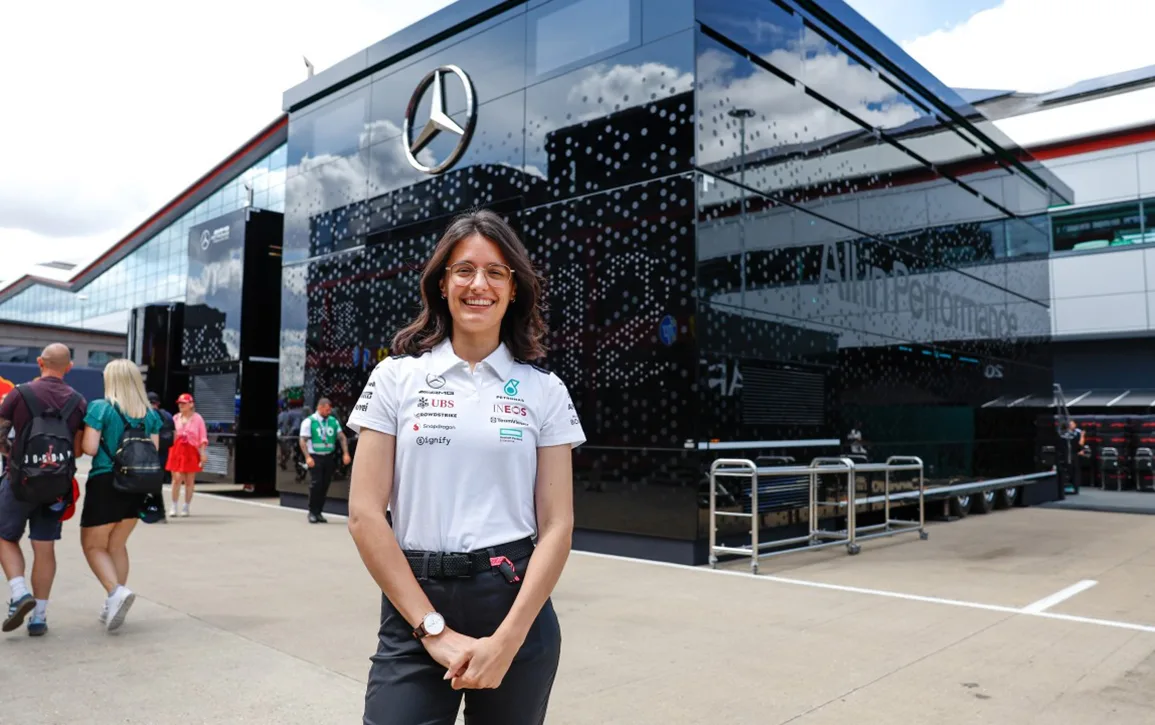
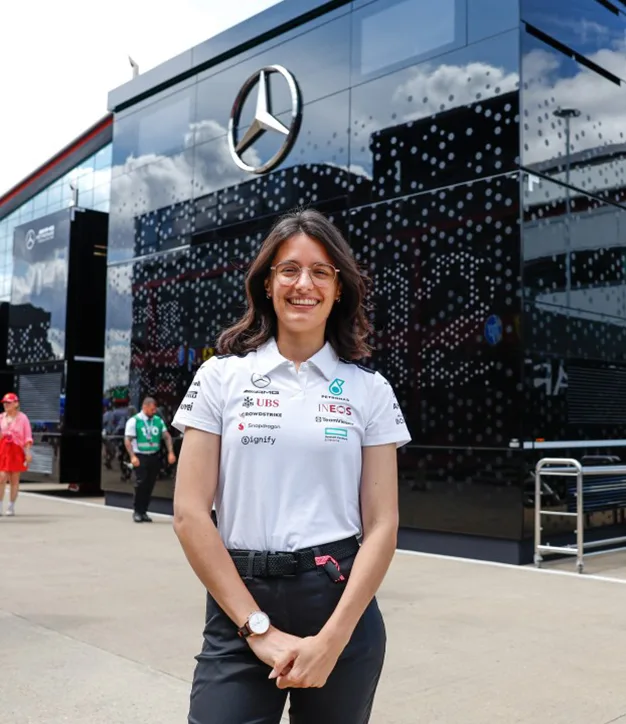
The first Lead the Charge candidate, Shreyas Raman, joined the Formula E team in 2022 as Team Principal Consultant. He was followed by Maryam Shaban (Sustainability Project Consultant) and Kim Quaghebuer (Sustainability and Environmental Consultant), who later transitioned into a full-time role.

  • Shreyas Raman - Team Principal Consultant · joined 2022

  • Maryam Shaban - Sustainability Project Consultant

  • Kim Quaghebuer - Sustainability & Environmental Consultant · now full-time

Their backgrounds reflect Akkodis’ global search for talent, spanning geographies, disciplines, and experience levels. From policy and sustainability to mechanical engineering and motorsport, each brought a distinct perspective.

What unites them is not a single profile, but a shared mindset: analytical, adaptable, and driven to perform in a high-performance environment.

Case Study 1: Reducing commuting emissions

The programme’s value is best demonstrated through its outcomes.

For a Formula One team, carbon impact extends far beyond race day operations. One of the most significant, and often overlooked, contributors is daily commuting to the team’s Brackley headquarters, where more than a thousand employees travel to work.

Limited public transport infrastructure makes this a structural challenge. As a result, commuting represents a surprisingly large share of the team’s overall emissions profile, in some instances exceeding the impact of on-track activity.

To address this, the Akkodis Lead the Charge programme identified an opportunity to reduce emissions through behaviour change. The focus: enabling employees who live in close proximity to share journeys more effectively, reducing both vehicle usage and barriers to access for those without their own transport.

Maryam Shaban led the implementation of a lift-sharing scheme in partnership with an external provider. Her work spanned programme design, internal communications, rollout, and continuous engagement to encourage adoption. In its second year, Kim Quaghebuer took over the initiative, ensuring continuity while refining and scaling the programme.

The impact has been measurable. The initiative delivered a reduction of more than 10% in commuting-related emissions, supported by strong employee participation.

As Alice Ashpitel notes, success in this area depended on sustained engagement rather than a purely structural solution: “It requires working closely with individuals to find approaches that fit with how people actually work and perform at their best.”

Case Study 2: Tackling food waste

A second area of focus was the team’s on-site catering operation, an essential part of supporting daily performance, but also a source of inefficiency through food waste.

Initial observation highlighted consistently high volumes of waste, with limited understanding of the underlying drivers. Addressing this required a combination of analytical insight and operational change.

Working closely with the catering team, programme participants analysed consumption patterns, improved meal forecasting and reviewed portioning approaches. These changes were complemented by clear communication to employees, helping them understand adjustments and adapt behaviours accordingly.

More broadly, the initiative reinforced a key principle: effective sustainability efforts depend not only on identifying inefficiencies, but on translating insight into practical change across multiple teams. As Ashpitel highlights, success often comes from “understanding different teams and finding solutions that meet sustainability targets without compromising performance.”

A programme delivering sustained impact

Taken together, these initiatives illustrate the broader value of Akkodis Lead the Charge, delivering tangible outcomes within a highly demanding, high-performance environment.

A consistent theme has been the calibre and impact of the candidates. What begins as a defined scope of work often expands quickly, as individuals identify additional opportunities to create value across the organisation.

This is enabled in part by the diversity of backgrounds the programme attracts. Candidates bring a mix of expertise, from engineering and systems thinking to policy and behavioural change, allowing the team to approach challenges from multiple perspectives. That range has supported work across internal engagement, operational efficiency and process optimisation.

Kim Quaghebuer’s transition into a full-time role reflects this trajectory. Her position spans engineering, sustainability and cross-functional engagement, an increasingly important combination as organisations look to embed sustainability into core operations. As Ashpitel notes, the role requires both “technical rigour” and the ability to engage teams across functions, bridging expertise with influence.

Sustainability as a driver of performance

Within Formula One’s cost-capped environment, sustainability is increasingly embedded within performance thinking rather than treated as a parallel priority.

Efforts to improve efficiency, from reducing waste to optimising resource use, have a direct impact on competitiveness, particularly under FIA financial regulations. In some cases, sustainability initiatives also influence cost cap dynamics, with elements of investment unlocked through collaboration with the FIA.

At its core, the relationship is clear. “Sustainability is about efficiency, and efficiency is about performance,” Ashpitel notes, underlining how environmental progress and operational advantage are becoming closely linked.

Akkodis in action

For Akkodis, Akkodis Lead the Charge serves as a clear expression of its core value proposition.

“It definitely has. Every collaboration we have with the team is valuable. But this one is particularly aligned with our mission, to boost STEM careers and support the next generation of technology, engineering and sustainability.”

Maria Bergving — Global SVP Brand and Marketing, Akkodis

The programme reflects what Akkodis delivers at scale: bringing together technology and talent to solve complex challenges. Within the high-performance environment of Formula One, that proposition becomes tangible, demonstrating capabilities the company delivers consistently for clients across industries.

It also brings to life what Akkodis defines as “powered by Akkodis Intelligence”, the ability to combine deep technology expertise with the right talent to create measurable impact. As Bergving puts it, “it’s very much connected to our overall narrative as a company, bringing together technology and talent. That’s exactly what we offer to our clients.”

From example to broader narrative

While Akkodis Lead the Charge stands out as a flagship initiative, it reflects a much broader capability.

“The Lead the Charge candidate is one example out of many. We’re doing this every day, opening doors, connecting the right people with our customers, and applying technology to real challenges.”

Jasmin Opel — VP Global Brand, Partnerships and Audience Engagement, Akkodis

Positioned within Formula One, the programme provides a tangible, highperformance context to showcase that model in action. It demonstrates how targeted talent, when combined with the right technology and environment, drives measurable impact in sustainability and beyond.

This is Akkodis — a partner at the intersection of talent, technology and performance, powered by Akkodis Intelligence.

Lead the Charge 2.0 - what's next?

Building on the success of the programme to date, Akkodis Lead the Charge enters a new chapter in 2026. Lead the Charge 2.0 expands the experience beyond sustainability, giving one successful candidate a four-week internship across multiple Mercedes-AMG PETRONAS Formula One Team departments, including Data Analytics, Sustainability, Marketing Operations and Applied Science.

Designed to showcase how performance is built through technology, data and collaboration, the programme offers hands-on experience in one of the world’s most advanced engineering environments. Applications for Lead the Charge 2.0 are now open, continuing Akkodis’ mission to connect emerging talent with opportunities that accelerate careers and drive innovation.