Skip to content

Nine Times Champions:
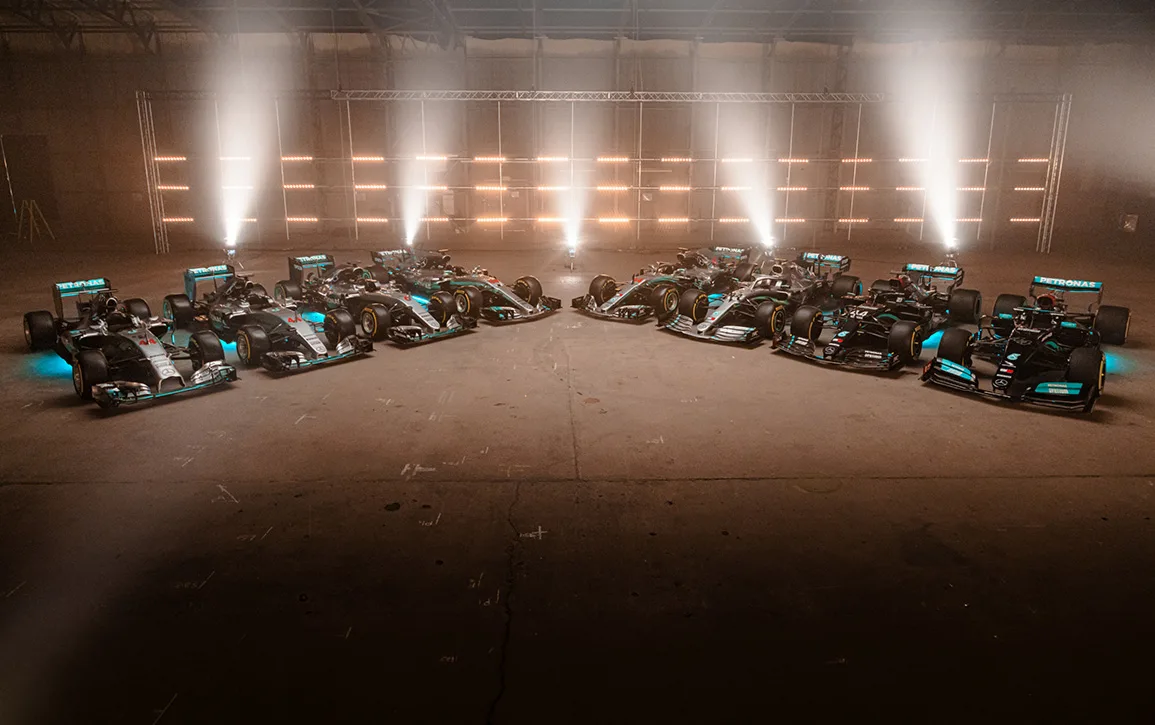
The Story of Mercedes' Constructors' Championship Success

9 November 2026
10 Min Read
Colin Johnston |EXTERNAL CONTRIBUTOR
top-M651530 Kopie
mobile-M651530

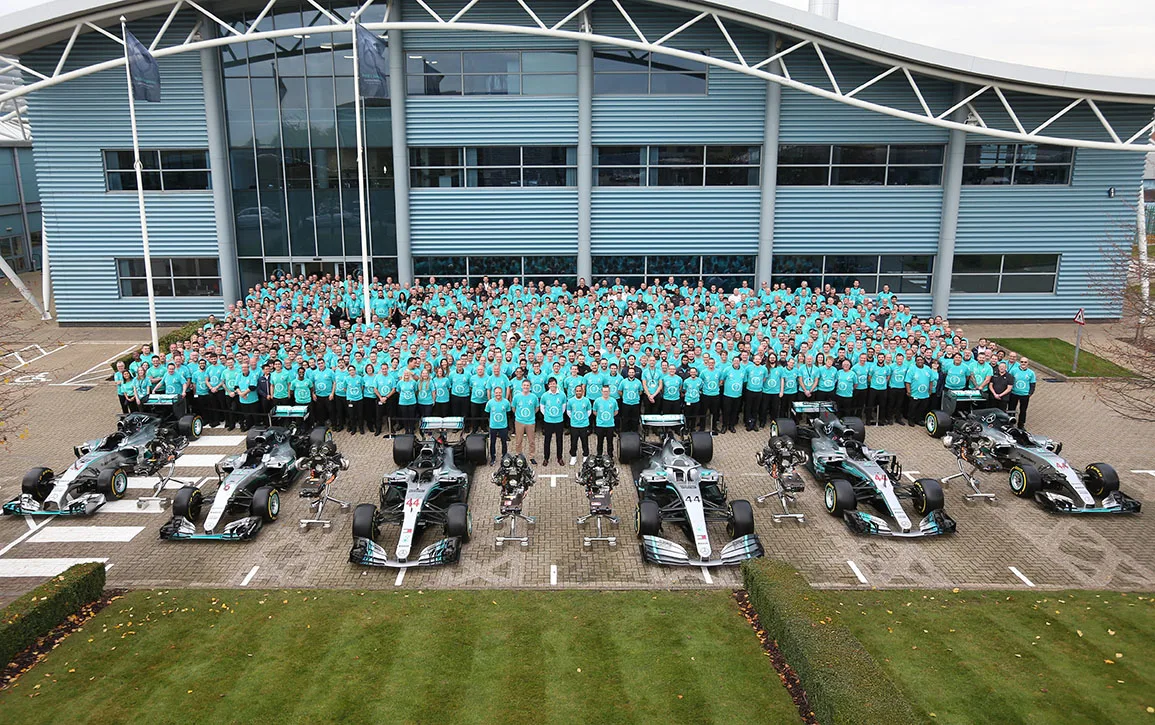
Formula One can appear a sport of the individual – the heroic driver, prevailing against the odds. But they are raised to such heights by a team of people at the racetracks and back in the factories of Brackley and Brixworth.

The modern Grand Prix team is where engineering excellence, organisation and passion collide. Races are won in the stores and machine shop, as well as at the track. This is what makes our sport unique, and that is celebrated through the World Constructors’ Championship.

First awarded in 1958, the title arrived too late to recognise Mercedes-Benz’s astonishing return to Grand Prix racing in 1954 and ’55. But the Silver Arrows would return in a new guise, with the men and women of Brackley and Brixworth carrying the three-pointed star into a new age.

M87058

2014 – the Beginning of the Hybrid Empire

The dawn of the 1.6-litre V6 turbo-hybrid era represented a new beginning for F1 – and Mercedes' preparation had been long, hard, and brilliant.

At Brixworth, Mercedes-Benz High Performance Powertrains produced a masterpiece. An ingenious split-turbo design separated the compressor, at the front of the engine, from the turbine at the rear. The MGU-H was mounted in the V, on the shaft linking the two. It was an elegant solution that addressed power, efficiency and packaging. At Brackley, they crafted the W05 around this remarkable power unit.

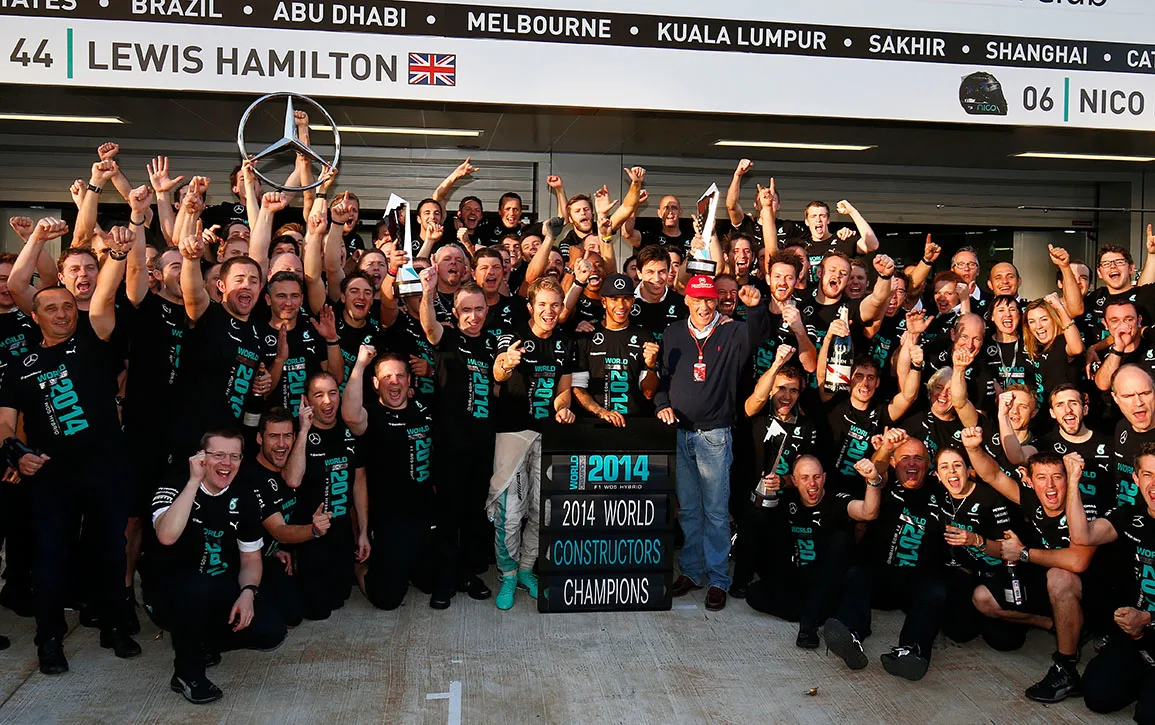
The results were extraordinary. Mercedes won 16 of the 19 Grands Prix, claimed 18 pole positions and scored 31 podiums – including a record 11 one-two finishes. Mercedes' tally for the season, 701 points – 296 ahead of the runners-up.

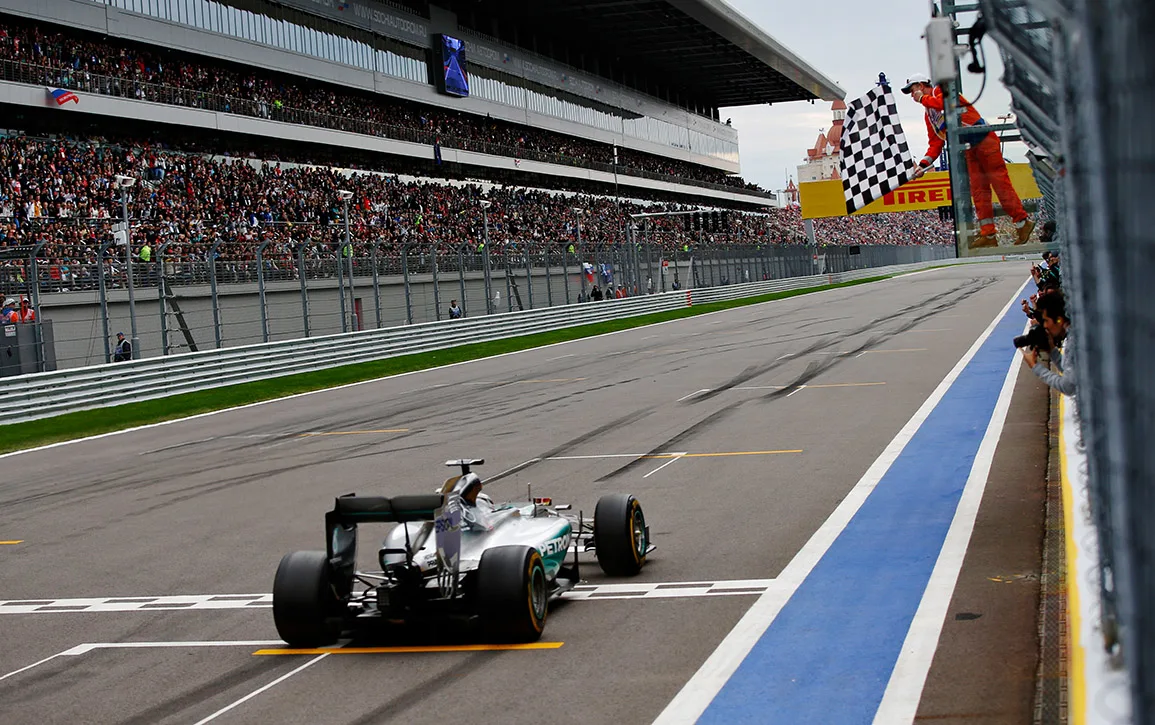
The crowning moment came in Sochi, where Lewis led Nico home to secure the title with three races remaining – the first Constructors' Championship win for the Mercedes works team.

Lewis was quick to recognise to whom the achievement belonged – speaking of the “incredible synergy” within the team, and the support that extended “right through from board level.”

“They are real racers.”

The Silver Arrows were back on top.

M13089

2015 – Staying on Top

2014 had been a statement of intent, 2015 was confirmation. Mercedes returned with the W06, an evolution of its championship-winner, but there was no time to stand still. The challenge was to maintain an advantage, while Ferrari and Sebastian Vettel began to mount a challenge.

The 2015 numbers were every bit as impressive. Mercedes again won 16 of the 19 Grands Prix, but improved on the previous season by recording a remarkable 12 one-two finishes. Eighteen pole positions, 32 podiums, and 703 points – 275 ahead of Ferrari.

Yet the season was not without its warnings. Vettel won in Malaysia and Hungary before Mercedes endured an unusual, difficult weekend in Singapore. Neither Silver Arrow looked capable of challenging for victory; Lewis retired and Nico finished fourth. It was a rare reminder that the advantage was not invulnerable.

Mercedes secured its second consecutive Constructors’ title in Russia, with four rounds remaining. Lewis then sealed his third Drivers’ Championship in Austin, while Nico finished the season with three successive victories.

Toto was clear about the achievement: “We can talk about chassis and power units winning titles. But really it’s about people – and every one of those men and women is a deserved World Champion.”

It was now clear – Mercedes had not merely built winning machines, it had built a winning team.

M44426

2016 – The Price of Success

By 2016, Mercedes had become the team everyone needed to beat. The W07 was yet another formidable machine, winning 19 of the 21 Grands Prix and taking 20 pole positions. The team won 765 points, almost 300 more than Red Bull – yet this was not always a harmonious season.

Lewis and Nico had been friends since their karting days. Now, as team-mates at the peak of F1, their rivalry became fierce. They collided on the opening lap in Spain, putting both cars out of the race, then came together again while fighting for victory in Austria. Toto and the team were left managing a contest in which neither driver was prepared to give an inch.

There were other complications. Lewis suffered some engine issues, most damagingly in Malaysia, where a failure likely cost him victory. Nico, meanwhile, built a commanding advantage and maintained his composure under pressure.

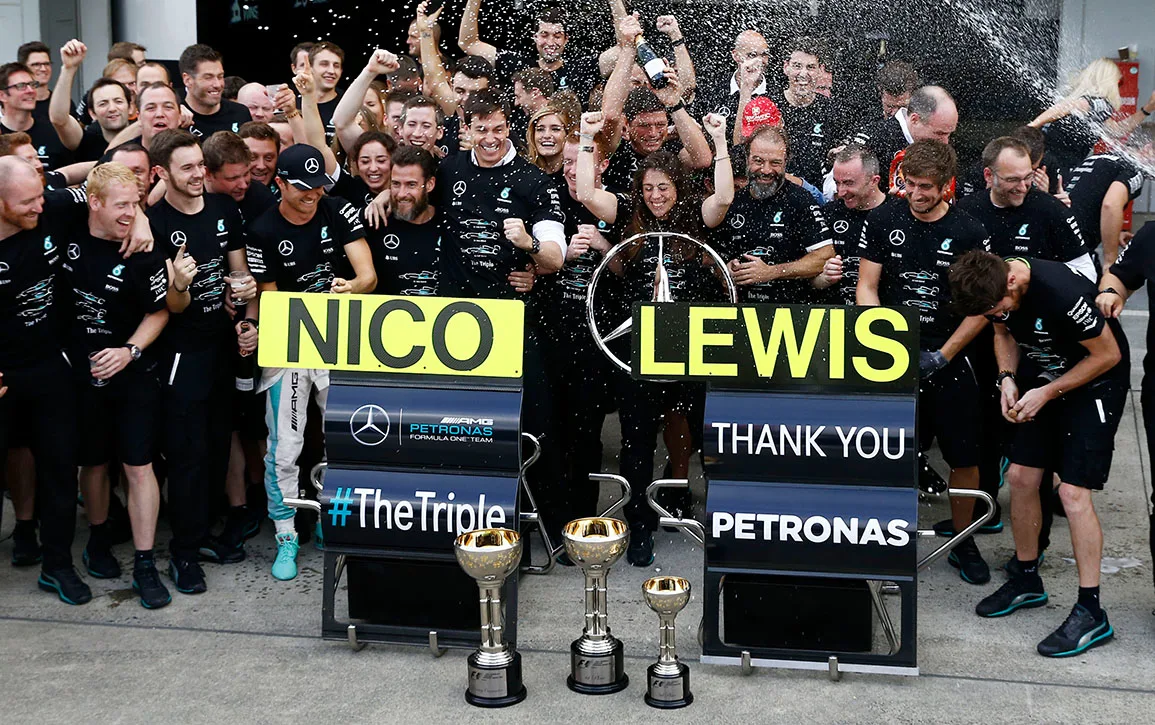
Mercedes secured its third consecutive Constructors’ Championship in Japan, with four races still to run. Nico went on to win the Drivers’ title in Abu Dhabi, finishing five points ahead of Lewis. It was both the culmination and the end of his Formula One career. Just five days after the finale, he announced his retirement.

The team had achieved another remarkable double. But the season left a question hanging over Brackley – how do you allow two great drivers to race flat out for the same team, without the rivalry consuming it?

M143535

2017 – A New Partnership

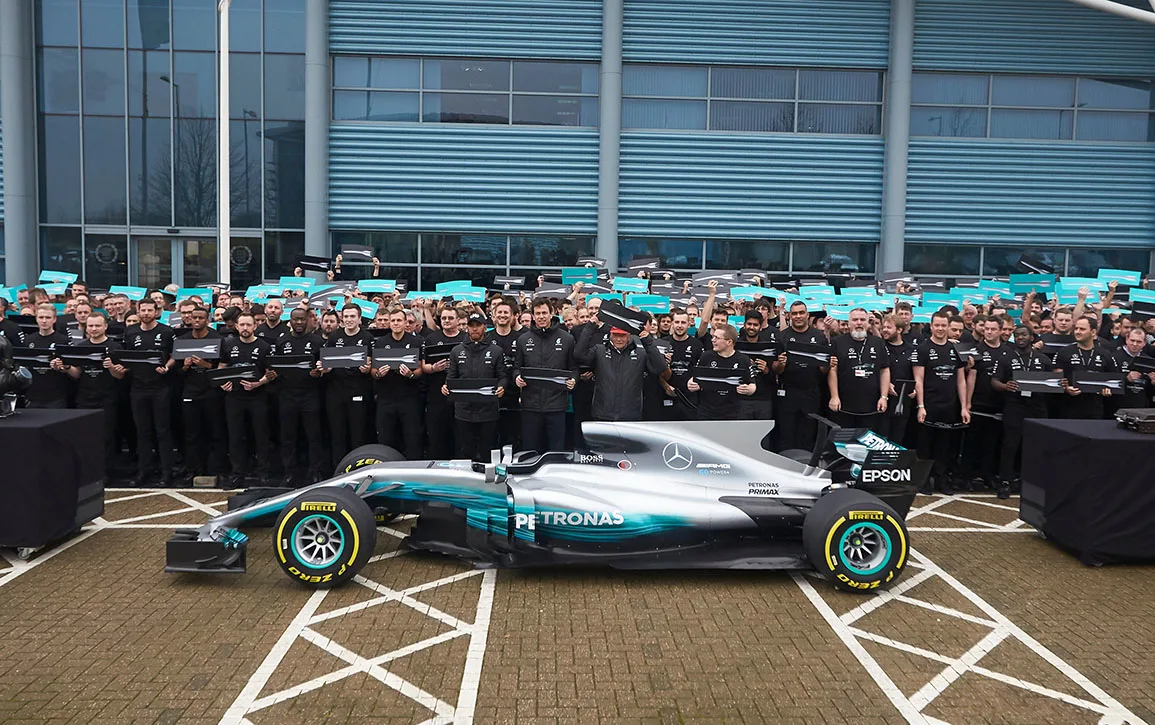
Nico’s sudden retirement left Mercedes with an unexpected vacancy. Valtteri Bottas arrived from Williams, joining Lewis for a season that would test the team in a different way. The W08 was quick, but not always easy to understand. Mercedes described the car as a ‘diva’, while Ferrari and Vettel emerged as a serious challenge.

The contest was closer than Mercedes had become accustomed to. Ferrari won five races, and Vettel led the Drivers’ Championship for much of the first half of the season. But Lewis and Valtteri delivered when it mattered. Lewis won nine Grands Prix, Bottas three, giving Mercedes 12 victories and 668 points – 146 ahead of Scuderia Ferrari.

Mercedes secured its fourth consecutive Constructors’ title in Austin, with three races remaining. Lewis went on to win his fourth Drivers’ Championship, while Valtteri finished third in the standings.

The refreshed driver line-up had brought a change of atmosphere. The fierce rivalry of the Rosberg years was gone. In its place, a partnership that would help Mercedes extend its remarkable run.

M179890

2018 – The Tough One

Ferrari arrived in 2018 with a car capable of taking the fight to Mercedes, and for much of the season it looked as though the Constructors’ Championship might

change hands. In such a tight contest not only outright speed, but reliability, strategy and execution would prove decisive.

The W09 was not always the quickest car, but Mercedes maximised its opportunities. Lewis was in mighty form, winning 11 races and securing his fifth Drivers’ Championship. Valtteri endured a frustrating season, finishing without a victory, but his contribution to the team's success remained vital.

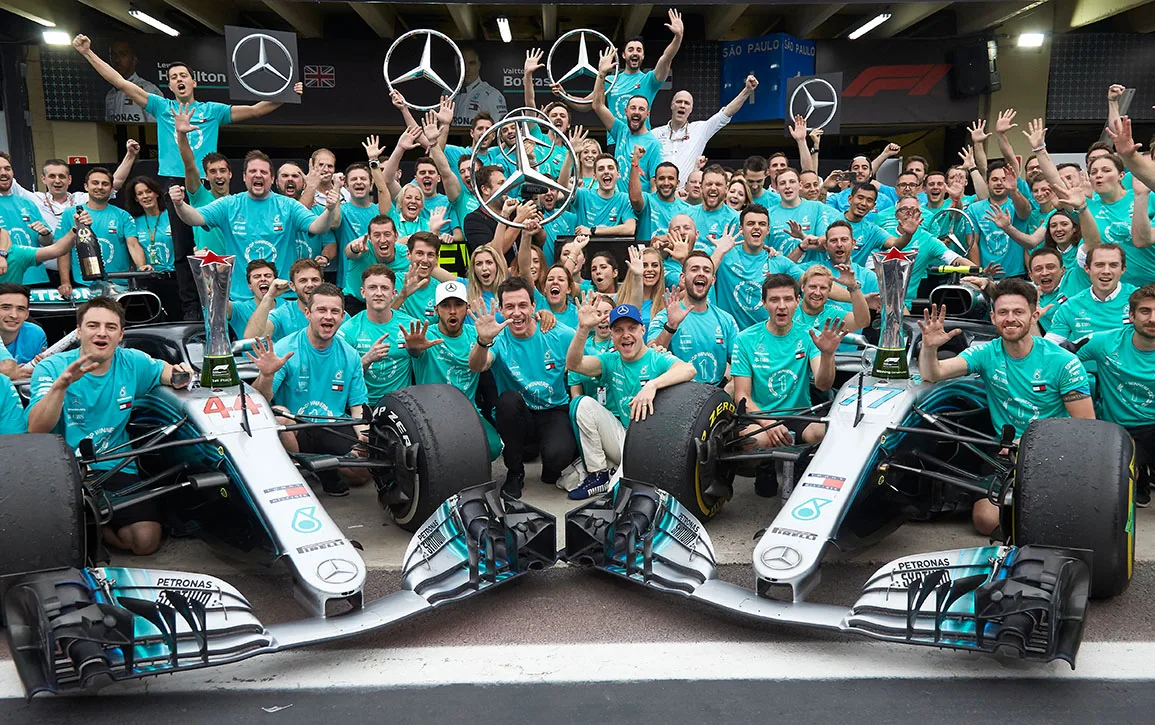
Mercedes scored 11 wins and 655 points – 84 ahead of Ferrari. The Constructors’ title was finally secured in Brazil, with one race remaining. It was the fifth consecutive championship for the team, and perhaps the most satisfying yet – not because it had been easy, but because it had been hard.

M219869

2019 – Relentless

Mercedes began 2019 in a fashion that seemed designed to discourage its rivals. The opening five Grands Prix all ended with a one-two finish for the Silver Arrows. No team had ever started a season in such a relentless way.

Valtteri won in Australia and Azerbaijan, while Lewis took the other three victories. Ferrari had arrived with high expectations, but were left chasing results.

The pattern changed as the season progressed, but Mercedes never surrendered its advantage. Lewis won 11 races, Valtteri four, and the team finished the year with 15 victories, 32 podiums and 739 points. Ferrari were 235 points behind.

The Constructors’ Championship was secured in Japan, four races before the end of the season. Lewis followed with his sixth Drivers’ title, leaving Mercedes with six consecutive championship doubles.

It was not merely speed that made the difference. Mercedes had become exceptional at converting competitiveness into results. Rivals could win races, but beating Mercedes over an entire season was a much tougher proposition.

M250797

2020 – When The World Stopped

The 2020 season began in circumstances nobody could have imagined just a few weeks before. The global pandemic delayed the start of the championship, disrupted the calendar, and brought F1 back to the circuit in a very different world. Seventeen races were squeezed into a shortened season, often behind closed doors.

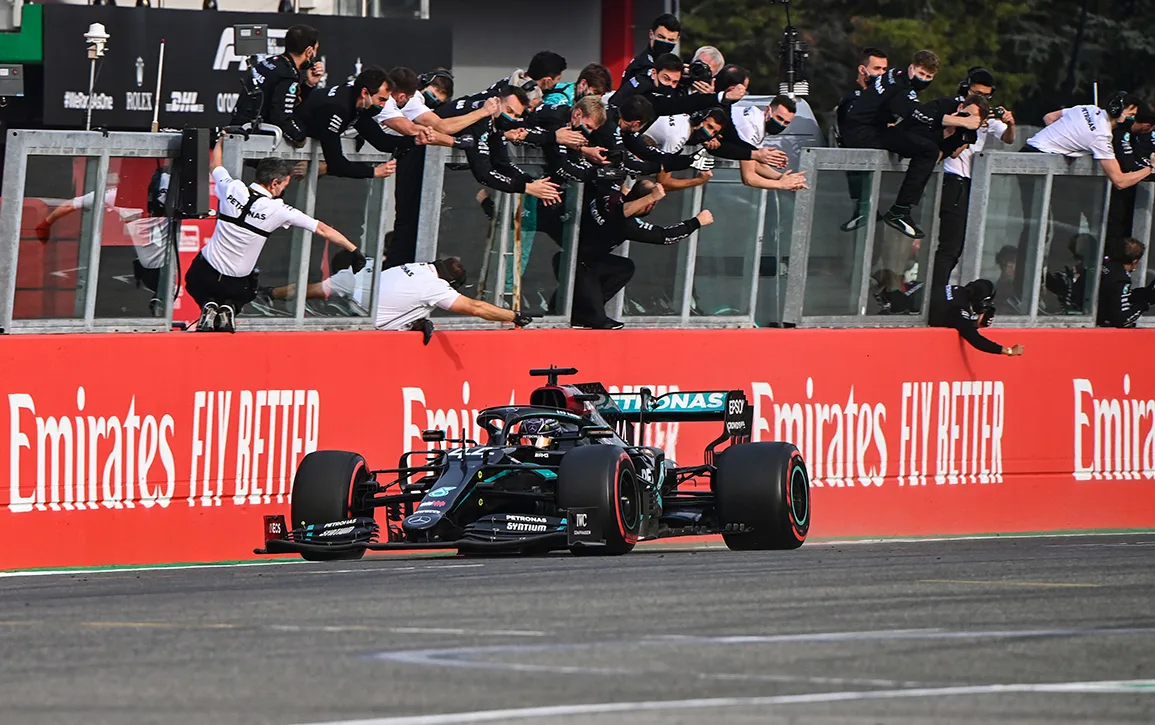
As ever, through all uncertainty, Mercedes remained a constant. The W11 was an extraordinary machine, and its most talked-about innovation was the Dual Axis Steering system (DAS) which allowed the drivers to adjust the toe angle of the front wheels, by pushing or pulling the steering wheel. It was a clever piece of engineering, that would be outlawed for the season after.

Lewis won 11 races on his way to a record-equalling seventh Drivers’ Championship. Valtteri added two more victories, giving Mercedes 13 wins and 573 points. The Constructors’ title was secured at Imola, with four rounds still to run.

Lewis’ absence from the Sakhir Grand Prix, after contracting Covid-19, was a reminder of how on-edge the entire season was. In his place, George Russell stepped up, and came agonisingly close to a first Grand Prix victory, before a pit-stop error and a late puncture intervened.

Mercedes had secured a seventh consecutive Constructors’ Championship. In a year where the world shifted, and much that we took for granted appeared lost, the team’s ability to keep functioning at the highest level was a remarkable achievement in itself.

M297743

2021 – End of an Era

The 2021 season was different. For the first time in years, Mercedes faced a sustained challenge from a rival with the pace and determination to take the fight all the way. Red Bull had built for Max Verstappen a car capable of matching the Silver Arrows, and the contest between Verstappen and Hamilton became one of the most intense title battles in Formula One history.

With no room for error, Lewis won eight races, Valtteri one, and the team fought for every point. The two drivers were working together for the final time, with Valtteri set to move to Alfa Romeo for 2022. Behind them, everyone at Brackley and Brixworth were engaged in a development race that demanded extraordinary effort.

Mercedes finished the season with nine victories and 613.5 points. Red Bull was close behind on 585.5. The Constructors’ Championship was secured at the final round in Abu Dhabi, giving Mercedes an eighth consecutive title — an achievement without precedent in Formula One.

But the Drivers’ Championship went the other way. Lewis lost to Verstappen in the extraordinary and fiercely disputed closing laps at Yas Marina.

For Mercedes, the achievement was both magnificent and bittersweet. Eight titles in succession was an astonishing record, but the run was over. The team had reached the summit and, for the first time in years, another had found a way to stand alongside it.

M651559

2026 – A New Generation, A New Beginning

The end of Mercedes’ eight-year reign brought a period of readjustment. The ground-effect regulations introduced in 2022 proved a challenge, and although George secured a victory in the W13’s first season, the team could not find a consistent route back to the front. Red Bull took the next two Constructors’ titles, before McLaren emerged as the sport’s leading force in 2024 and 2025.

The arrival of the 2026 regulations offered fresh opportunity for the combined operations of Brackley and Brixworth. The new technical era meant a fresh set of challenges, and the team approached it with a new generation of drivers. George providing experience and continuity, while Kimi Antonelli, in his second season, emerged as one the defining figures of the championship.

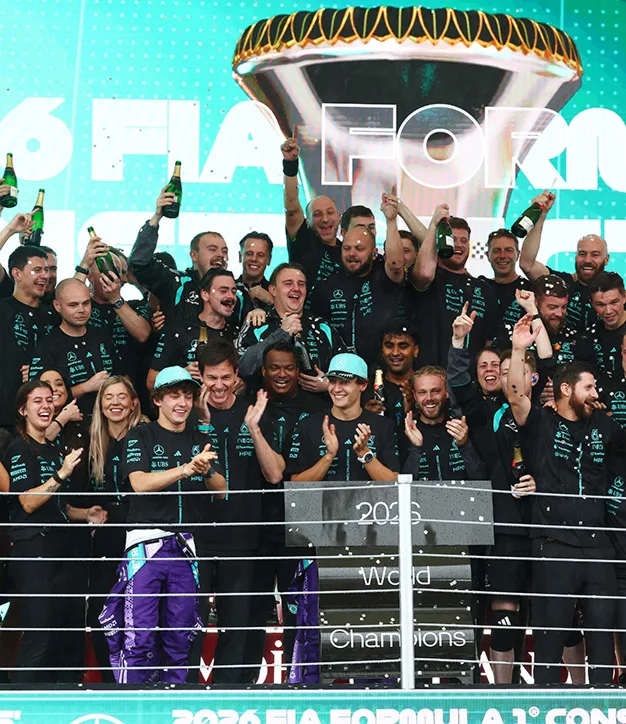
Kimi’s rise was remarkable. The young Italian secured the Drivers’ Championship in Mexico City, adding his name to a roll of honour that includes Juan Manuel Fangio, Lewis Hamilton and Nico Rosberg. And by the time the teams arrived in Brazil, Mercedes was also within reach of the Constructors’ title, leading Ferrari by 126 points.

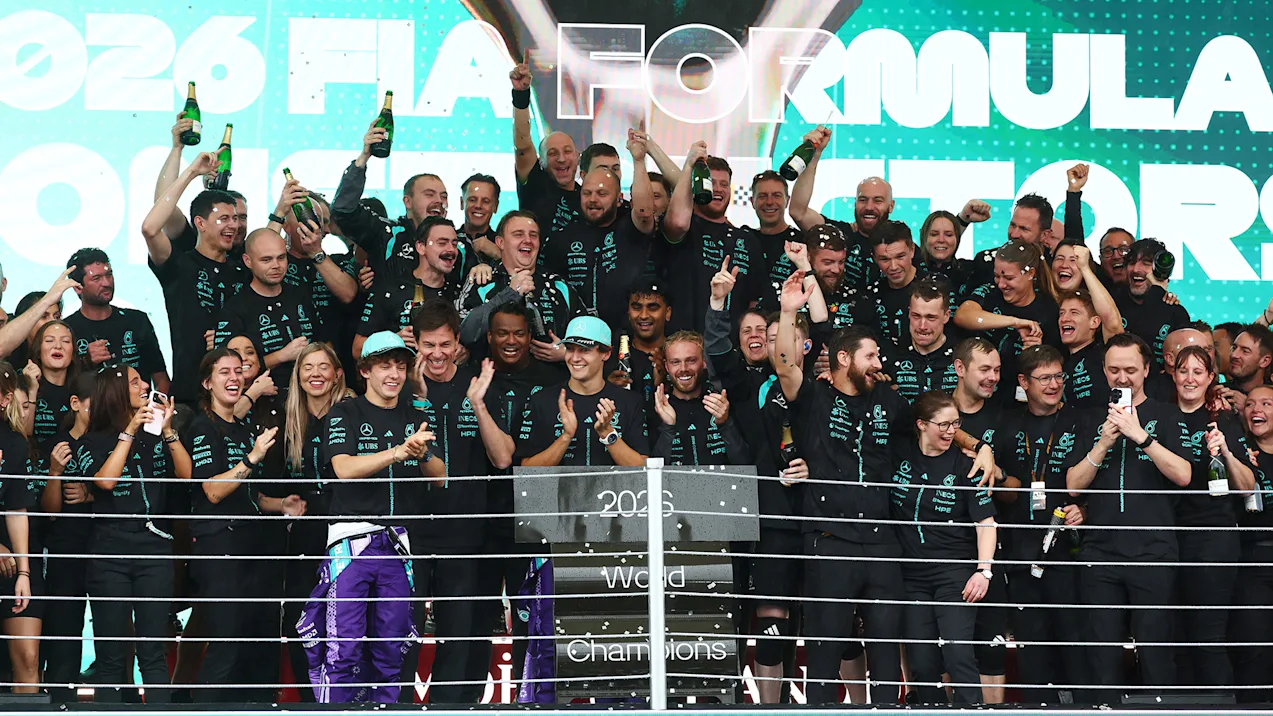
At Interlagos, the team delivered once again. The points secured in São Paulo enough to bring the Constructors’ Championship back to Brackley and Brixworth. Five years after the end of its extraordinary run, Mercedes were once again the benchmark in Formula One.

This ninth Constructors’ Championship was not a continuation. The eight consecutive titles from 2014 to 2021 had been built around Hamilton, Rosberg and Bottas, and a generation of hybrid-era machinery. The new success belonged to a different generation, with Antonelli and Russell at the wheel and a new set of technical challenges overcome.

There was however a thread connecting the two eras – the thread that runs through 125 years of Mercedes racing. The commitment to engineering, preparation and teamwork – it had underpinned 1914, 1954, 2014... and it remains. Faces may change, and regulations change, but ambition and excellence endure.
Shop Now

Shop Now: World Constructors' Championship Collection

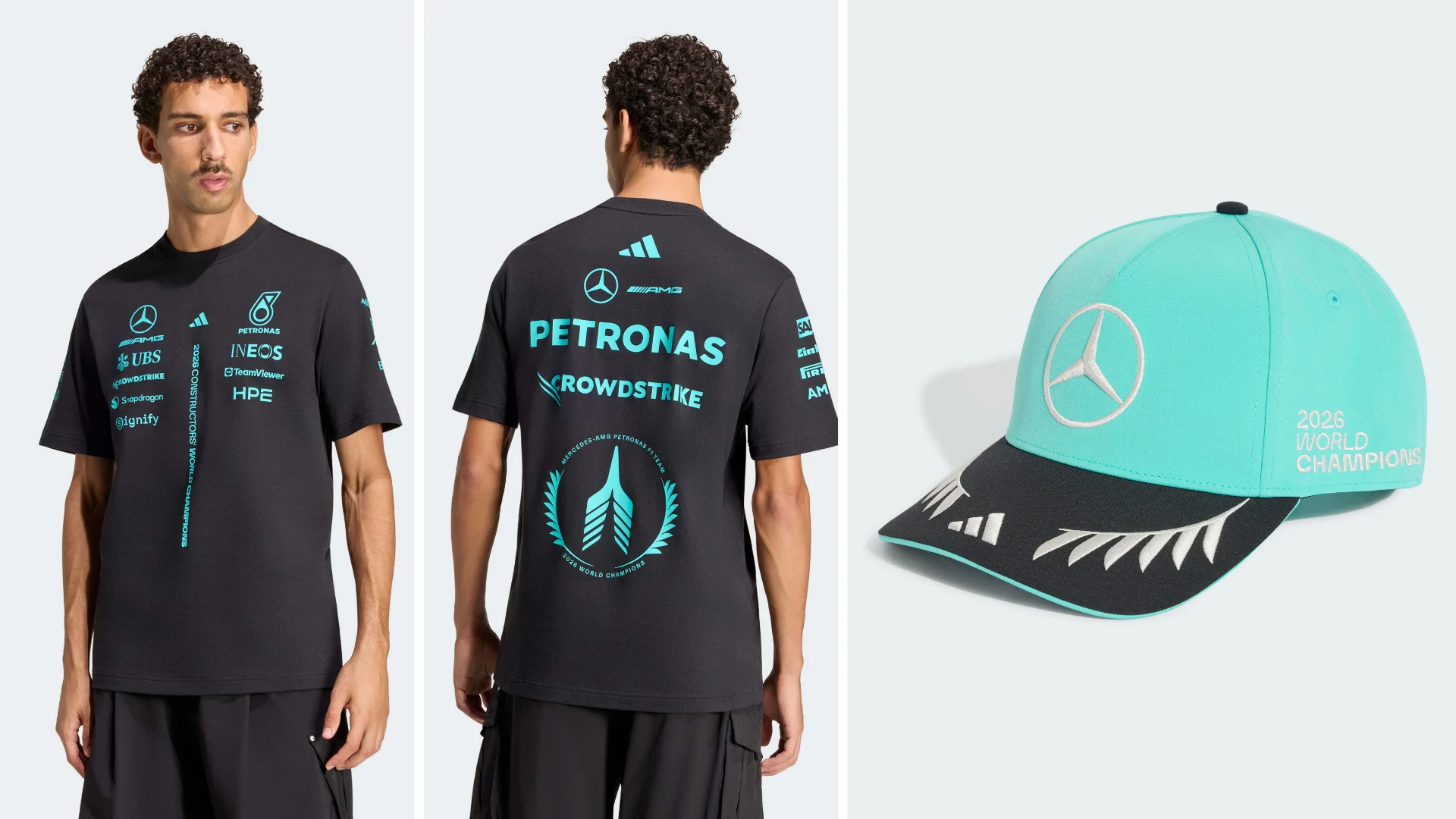
Celebrate our 2026 Constructors’ Championship with our 2026 Constructors' Championship T-Shirt and Cap.
OFFICIAL TEAM STORE
Share