Skip to content

Episode Four Q&A: The Chassis

The 2026 F1 regulation changes don’t just mark a new chapter for the sport, they rewrite the rulebook in a manner rarely seen in the pinnacle of motorsport.

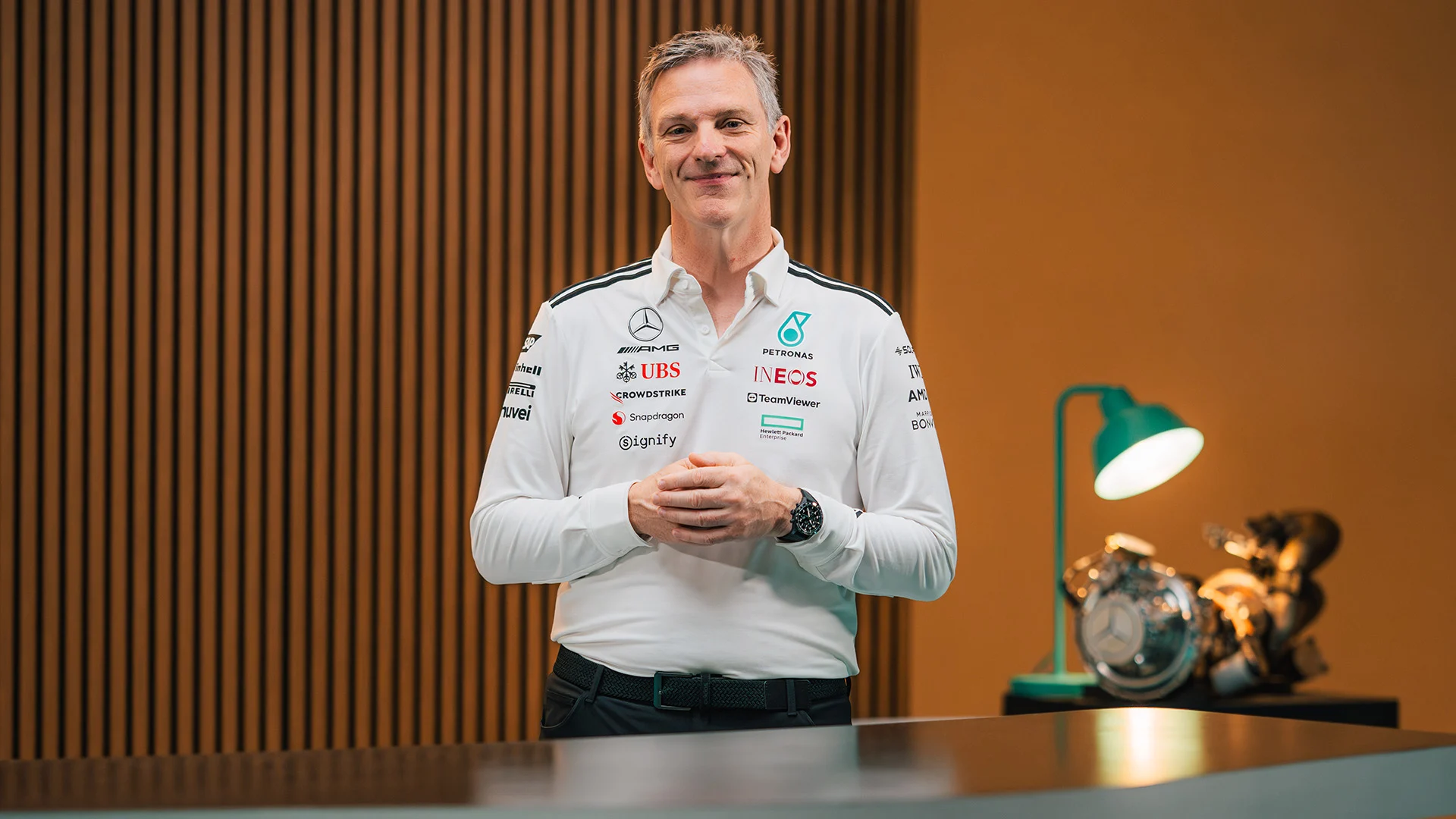
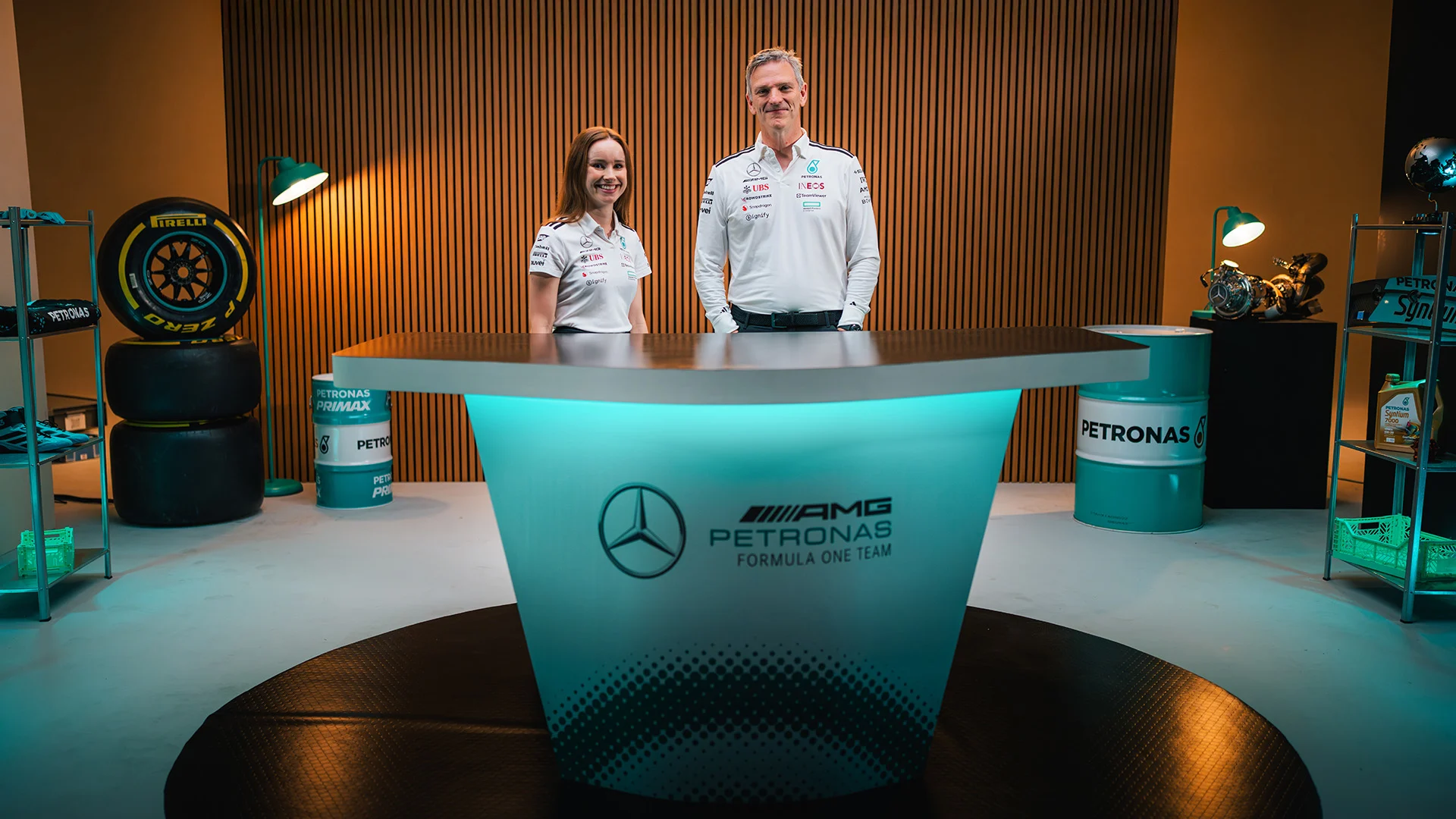
While we have shone a spotlight on the history of F1 regulation changes, the power unit, and fuel changes for next year already throughout this series, we sat down with James Allison, Technical Director, Mercedes-AMG PETRONAS F1 Team, and Rachel Nash, Head of F1 Regulation Analysis, Rachel Nash to discuss the incoming changes to the chassis for 2026.

Rachel, can you give us a sense of just how significant the chassis regulation changes are for next year?

Rachel Nash, Head of F1 Regulation Analysis for the Mercedes-AMG PETRONAS F1 Team: “The fundamental changes to the power unit means that we have to completely rewrite what the chassis means. These two changes happening at the same time is the biggest change we’ve seen as a sport for a very long time.

“These chassis are going to be smaller, they’re going to be lighter, and as a result, hopefully, we’ll have more agile racing and closer racing which will hopefully make the sport more exciting to watch.”

What are the initial, most significant changes that are being introduced to the chassis?

James Allison, Technical Director for the Mercedes-AMG PETRONAS F1 Team:

“In Formula One, there is a rule that says that the cars must not be lighter than a certain amount. That minimum weight has gradually gotten heavier and the sport is making a very conscious effort to try to reverse that change.

“The minimum weight limit is reducing by 30 kilos and, in fact, you don’t just have to find 30 kilos of savings, you have to go more than that because you have to have some margin for error and you have to have some ability to then develop the car in the season.

“For most of the history of this sport the distance between the front and rear axle was actually not regulated. For the first time in 2022 they introduced a maximum wheelbase. And for 2026, the wheelbase is going to be 20cm shorter. That might not sound like a lot, but to package the gearbox, the hydraulics, the power unit, all the cooling system, all the pipes, all the everything under that sleek bodywork, that 20cm reduction is a big deal.

“They’re also making the cars a lot narrower. Reducing the width by 10cm. There is the hope that this will produce a more attractive racing spectacle because there will be more space for the cars to get into battle with one another.”

What’s changing on the aerodynamic side of these new regulations?

James Allison: “In the last few years we’ve had this thing we call DRS, the Drag Reduction System, which is the wing which flips up at the back, and we’ve gifted that only to the car that is trying to overtake. For that car, when it’s in DRS mode, that’s like this new term Straight Line Mode (SLM). The difference is not only are all cars given this flip up rear wing on all straights, but they’re allowed it for pretty much the whole straight.

“And that brings another change to the sport because, in the current world, when the DRS flips up the car is going at a fair lick it already has loads of downforce on it. So, it doesn’t notice particularly the loss of downforce that comes when that rear wing flicks up.

“But, if you start much earlier on the straight, which is what these new rules will do, to give us less drag for longer and on every straight, then at the point where that wing flicks up the car does not have this huge surfeit of downforce to keep it stable. And so, in order to ensure the car stays balanced, it doesn’t just lose a huge chunk of its rear downforce, but still pinned on the front axle, the front wing will also reduce.

“The whole car’s downforce and drag reduces, but it stays balanced. So, the car will feel lighter, and a bit less pinned on the road, but it won’t feel particularly nervous at one end or the other because it will stay balanced.”

With SLM replacing DRS and no longer exclusive to cars within a second of the driver in front of them, does that mean less likelihood of overtaking?

James Allison: “We don’t have DRS but we do have, for the first time, an official OVERTAKE mode, which, if you are within a second of the car in front and if you have the battery to do so, will allow the car to give its best efforts of power for a brief period where, when you press it, the power unit will give you its best.

"And with the increase in electrical energy for 2026, peak power in this power unit is really a thing of some fearsome beauty.

“The hope is that this differential management of electrical energy, with the use of the OVERTAKE mode, will prove a more exciting and less contrived version of overtaking.

Rachel Nash: “And it makes it much more strategic in terms of how you’re deploying all of your energy because it’s not just on the straights when you get DRS and you can overtake, you can overtake anywhere you fancy, as long as you’re prepared and you’ve got the power that you need.”

James Allison: “I would predict that all of the talk is going to be about energy management and about the strategy behind energy management.”
We've talked about performance but, as with every new set of regulations, there are some significant safety improvements this year. Could you talk us through those?

James Allison: “In every rule change there is always a consideration of trying to make the sport safer. 2026 is no different, with some fairly significant changes to the impact structures.”

Rachel Nash: “A lot of the tests over the years have got more stringent. We included the halos, and we have several tonnes that go into the side of the chassis as part of the testing before we’re allowed to even take them to a racetrack. But that’s increasing even further. The nature of the side penetration test is not just brute force now, but how the carbon is impacted, which is going to make it safer for all those side collisions, those T-bones that we’ve started to see.

“The other thing that’s changing is thinking about nose impacts. Historically, a nose crushes when it hits a barrier, which is great if you hit a barrier straight on. But, again, we see many crashes where side impacts happen. Someone hits the barrier slightly obliquely and the nose snaps off.

“The test is now changing so that instead of just a front impact test, you’re looking at what happens when the front is already snapped off and can you still sustain enough impact into the wall.”

James Allison: “On the survival cell the challenge we’ve given our composite designers is ‘go and figure out how to cope with considerably more stringent squeeze tests and penetration tests, oh and by the way save several kilos on the chassis while you’re at it.”

The front tyres are due to narrow by 25mm and the rears by 30mm, why are we seeing that change?

James Allison: “Formula One has always been an open wheel series. Which means that we get to see the full round tyre out in the air. But the downside of having an open-wheeled formula is the tyre is a very draggy object. It’s a bit of a barn door for the oncoming air. If we make the tyres smaller, they will produce less drag. But smaller also means less rubber, and it’s the rubber that does all the hard work of turning the performance of the power unit, the skill of the driver, and the downforce that the chassis folk have put into the car – it’s the tyre that transmits all of that to the asphalt.

“Each bit of the rubber will have to do more work. And that probably means that each bit of the rubber will be hotter. And, if you’re a fan of the sport now, you know that we never shut up about tyre temperatures, and I suspect that this will also be a thing in 2026.”

Thank you both for your time. James, is there a final message you would like to share for fans of the sport?

James Allison: “These new rules will be a huge change for all of us. What we want to do is make sure that our car is the one at the leading edge of that pack. The one that is going to be taking the flag, that’s the part we’re interested in; trying to make sure every day at work we are looking for the opportunity in the rules so that we deliver a car that, at that first race, has a chance of winning and then a chance to propel us to a championship in 2026.”