Skip to content

Celebrating 120 Years of Rudolf Uhlenhaut:
Engineer, Visionary, Gentleman

9 July 2026
8 Min Read
Colin Johnston|EXTERNAL CONTRIBUTOR

There are many Mercedes-Benz racing legends, but one this is the story of the GOAT and the engineer.

One day, over lunch at F1 testing, a World Champion was grumbling about the handling of his Mercedes. Acknowledging the complaint, the Technical Director rose from the table, jumped on board the Silver Arrow, and set off to understand the problem.

Laps completed – and having clocked a faster time than the team had managed during the Grand Prix – the engineer told the great champion, with a wink, that he just needed more practice.

It's an outrageous tale, but compelling because it is entirely believable.

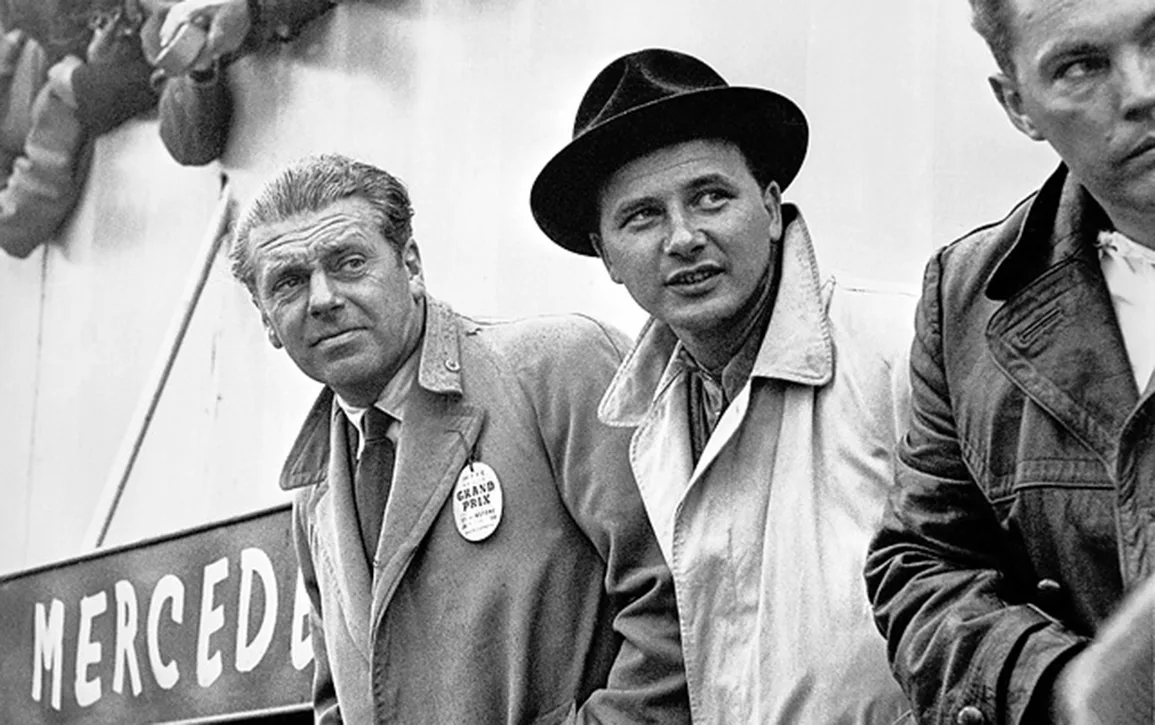
You see, this was not Lewis Hamilton and James Allison – this was 1955. The circuit was the Nürburgring Nordschleife, the champion was Juan Manuel Fangio, and the Technical Director?

Meet Rudolf Uhlenhaut: engineer, visionary, gentleman. Born 120 years ago, he is the man who made The Silver Arrows... and knew how to make them go
From London to Germany

Rudolf Uhlenhaut was born on 15 July 1906 into an affluent family, in Edwardian London. His Prussian father Max was the London director of Deutsche Bank; his mother Hilda, English. And in this happy family, home and primary school in Muswell Hill was shaped a gracious, curious child who would go on to revolutionise motoring and racing.

The outbreak of war in 1914 shattered much, and the Uhlenhaut family quickly moved to the continent. Belgium first, but obliged to retreat – step-by-step via Spa-Francorchamps – to Berlin and ultimately Bremen. These years of change – of home, school, language – along with his mixed heritage would mark Rudi, and set his world vision. Resilient, open, modest, considerate, and an Anglophile – he was ripe for learning and achievement in tough post-war Germany.

A Young Engineer Finds His Path

From secondary school, Rudi studied Mechanical Engineering in Munich – renting an apartment in the city, acquiring a DKW 250 motorcycle and a life-long love for skiing and the outdoors. Motorbikes would remain his passion and, remarkably, one of the greatest automotive engineers would never own a car of his own.

On completion of his studies, Rudi was accepted as part of the 1931 graduate intake at Daimler-Benz, in Stuttgart. It was a fantastic opportunity in difficult times, and he grabbed it with both hands. From that moment Rudolf Uhlenhaut would be inextricably linked with Mercedes-Benz, and their success with him.

The first role at Stuttgart was as a technical assistant, but his rise was meteoric. In this period very few people at the Daimler works, from staff to directors, held a driving licence. Rudi not only had a licence and a great feel for engineering, but he also had a girlfriend... in Berlin.

Every Saturday evening Rudi would take the current test vehicle – sometimes little more than a bare chassis – and drive the 440 miles to visit Edith. Then, he would make the return eight-hour journey through Sunday night, to clock-in on Monday morning.

Some of the cars could barely make it, some of them failed. Rudi noted the how and why, set to making them better... and married Edith.

From Road Cars to Racing Cars

By August '34 he was head of Driving & Finishing, and had forged a reputation as an exceptional team player and motivator. By the following April he was a Test Engineer in passenger vehicle development. There he was responsible for the chassis and suspension of the new 170V. It would prove to be a remarkable success on the road and in the market – over twenty years, perhaps the most important Mercedes-Benz road car.

As on the road, on the track. 1934 saw Mercedes-Benz return to Grand Prix racing – the new W 25, with a new silver livery, and with new & old rivals from Saxony & Milan. All through 1934 and '35 the racing machines where stretched in power and shrunk in mass, as the sport began an epic 'arms race'. Then in 1936 the Mercedes-Benz W 25 was pushed too far, and proved a racing disaster. Retreating from the European Championship to find new direction, the Daimler board made big changes.

The Young Man Chosen to Rebuild Mercedes

Fritz Nallinger decreed that a new Racing Department be established. The man chosen to lead this operation was someone Nallinger had seen and admired at close hand. At just 30 years old Rudolf Uhlenhaut was tasked with remaking Mercedes-Benz as Grand Prix championship contenders once again.

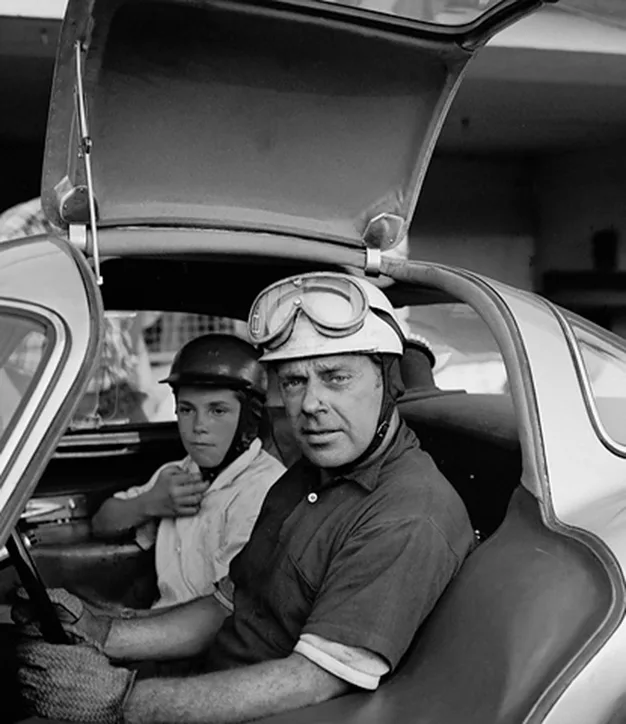
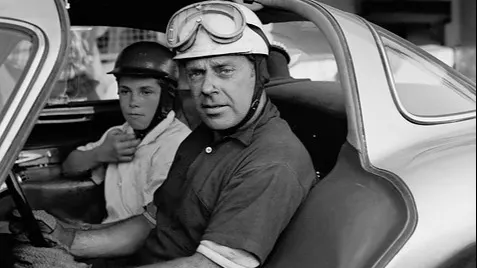
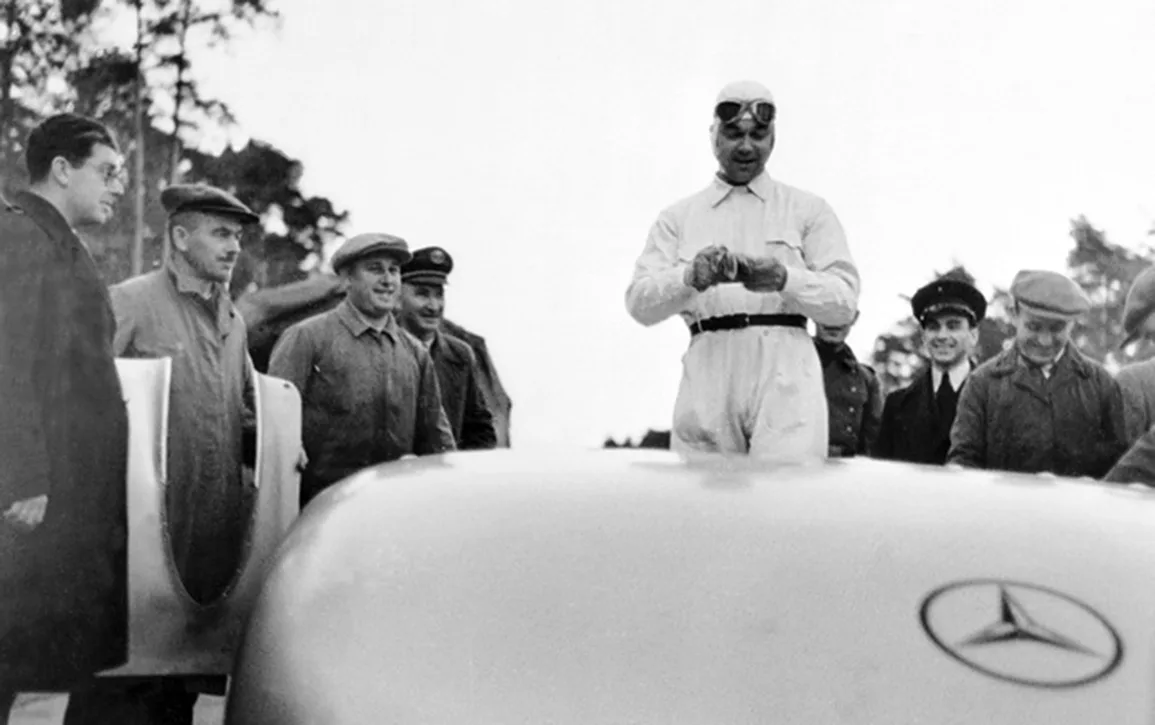
A first test showed the scale of the problem, as the powerful W 25 bounced and shuddered its way around the Nürburgring. And when the drivers Caracciola and Brauchitsch declared themselves happy enough and left, Rudi knew that there was much work left to do. So, just as he had done on the weekend trips to Berlin and in the miles developing the 170V, Rudi began to drive and drive. This first time at the wheel of a pure racing car – over 400bhp at his foot, in a chassis that twisted under power and bent under braking. He loved it... and he was fast!

Observations were made, data recorded, plans formed.

The revolution in Mercedes-Benz racing cars that Uhlenhaut and his team unleashed produced a remarkable racing car in the W 125 of 1937. This fearsome machine – remarkably inspired by the lessons and techniques of the humble 170V road car's development – would propel Mercedes back to success, Caracciola winning the European Championship.

Fantastic in chassis design, formidable in engine power. The supercharged 5.7-litre straight-eight was good for 600bhp over a race distance, with 646bhp seen on the bench – the most powerful Grand Prix car until the turbo era of the early 1980s.

Birth of the Gullwing

Through the rest of the 1930s Rudi's racing department would oversee a line of iconic, winning Silver Arrows that was only halted by war. Each one of these racers would be trialled and tested personally by Rudi – as he engaged with a new generation of technically-minded drivers who could share useful feedback, and take instruction.

When the darkest years were past, and Stuttgart emerged from rubble, Rudi returned to Mercedes-Benz. At first retooling and adapting the old 170V for a new world – then a return to racing.

The racing sports car he created, oversaw and tested for 1952 became the genesis of an iconic Mercedes-Benz line.

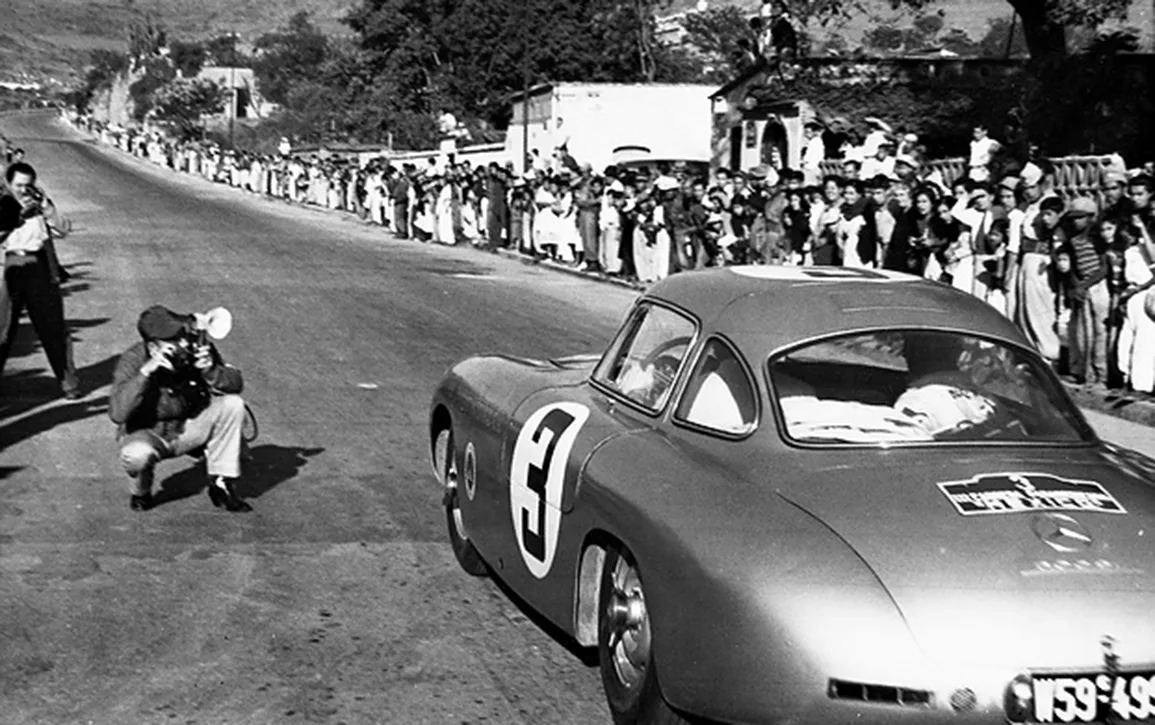
Inspired by a design he worked on privately in 1946, Rudi's triangulated, tubular spaceframe chassis was a wonder of rigidity and lightness. The resulting slippery little sports coupé was fabulously purposeful and effective – 2nd & 4th on the Mille Miglia and winner of the 24h du Mans and Carrera Panamericana, against much more powerful rivals.

The style, performance and success of the racing W 194 created demand for a commercially available version – the famous 300 SL 'Gullwing'. The mid-century supercar that remains as thrilling, potent and captivating in the 21st century

The 300 SLR and the Ultimate Company Car

Leading from the front, and as ever reflecting all glory onto his colleagues, Rudi oversaw the W 196 that brought Mercedes to Formula One in 1954. In parallel a sports car variant of that machine was also created – the 300 SLR.

Across the 1955 season the 300 SLR sports racer won the World Championship and every race it entered, save for the tragic 24h du Mans. Then, Mercedes suddenly withdrew from racing, and the next iteration of the 300 SLR was left without purpose.

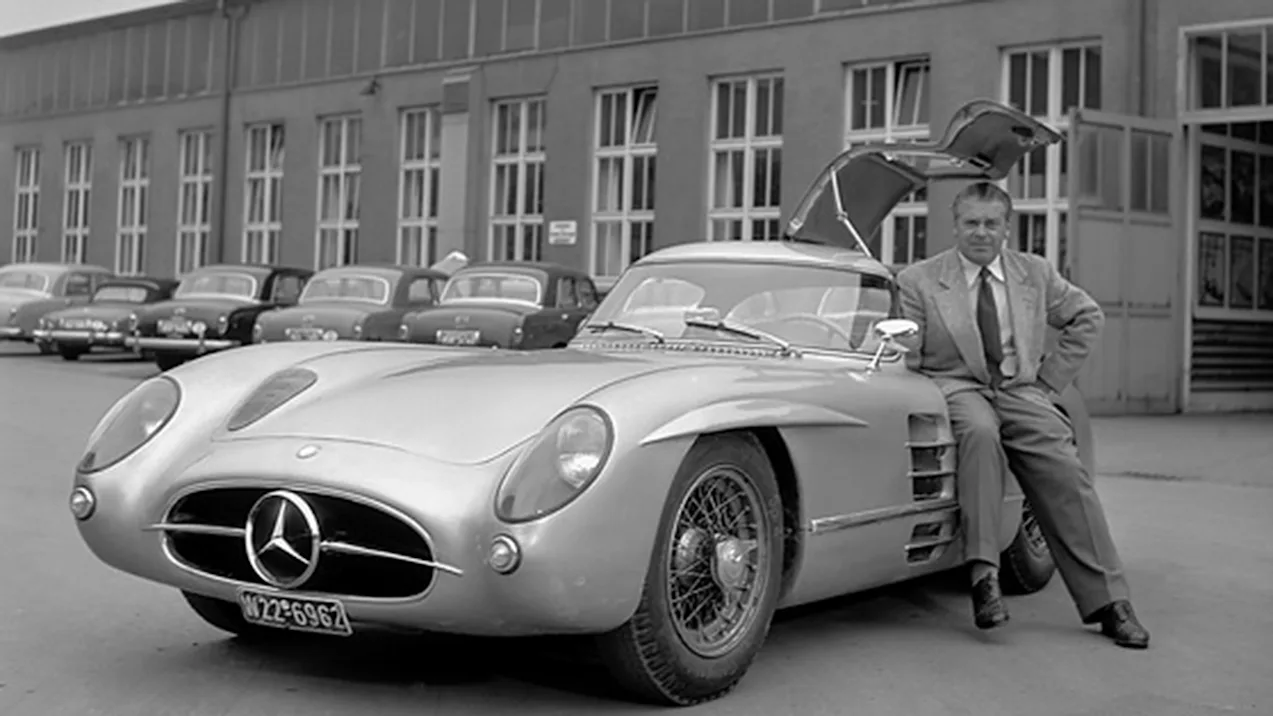
Designed for the cancelled Carrera Panamericana of 1955, the coupé version of the 300 SLR racer had been tested and trialled on the roads of Europe, in support of the sports car championship programme. Now, as those responsible for The Silver Arrows returned to passenger car development in Stuttgart, one of these two ultimate, racing Gullwings found a new role – as Rudi's company car. In time it was christened, “The Uhlenhaut Coupé”.

What a machine – a world championship-winning sports car for the morning commute. There is a tale of how Rudi's secretary thought he was running late for a noon appointment in Munich, and mentioned that it had all ready gone 11am when he was still shuffling papers in Stuttgart. Unconcerned, Rudi simply jumped into the 300bhp Uhlenhaut Coupé and hammered the 200 kilometres to Munich, to arrive on-time – if perhaps a little deaf – for his meeting. Never has the phrase “giving it full noise” been more apt.

The Most Valuable Car in the World

In May 2022 the second of the two 300 SLR Coupés built would be sold to fund global environmental initiatives. This fearsome, unraced machine released into the world for the sum of €135,000,000 – the most valuable car in the world.

Rudi's personal 300 SLR Coupé remains, magnificent, at the heart of the Mercedes-Benz Museum.

While the iconic 300 SLR Coupé captured the imagination and headlines, it was merely a snapshot in time of a remarkable career. Had Mercedes raced on, the 1956 car would've been quite different again – Rudi bristling with ideas and innovation. And while through the 1960s Rudi and his engineering teams forged and honed the reputation of Mercedes-Benz on the roads of the world, there was one last great sports car in gestation.

The C111 series are thought of today as special test and record-breaking vehicles. Handsome sports cars, unmissable in their high-visibility orange livery, one acts as a fluorescent fullstop to the Stuttgart museum. For a moment or more though the C111 was considered for production, and just perhaps Rudi would have overseen one last road-going miracle of engineering. It would have been the only worthy successor to the 300 SL Gullwing.

As it was, on his 65th birthday in 1971, the great Rudolf Uhlenhaut retired from his life's work. Ahead of him, eighteen happy years with family, yachts and motorbikes. Behind him, the utter dominance of Mercedes Benz on road & track. Humbly made in his own image – proven in his hands.

SHOP NOW

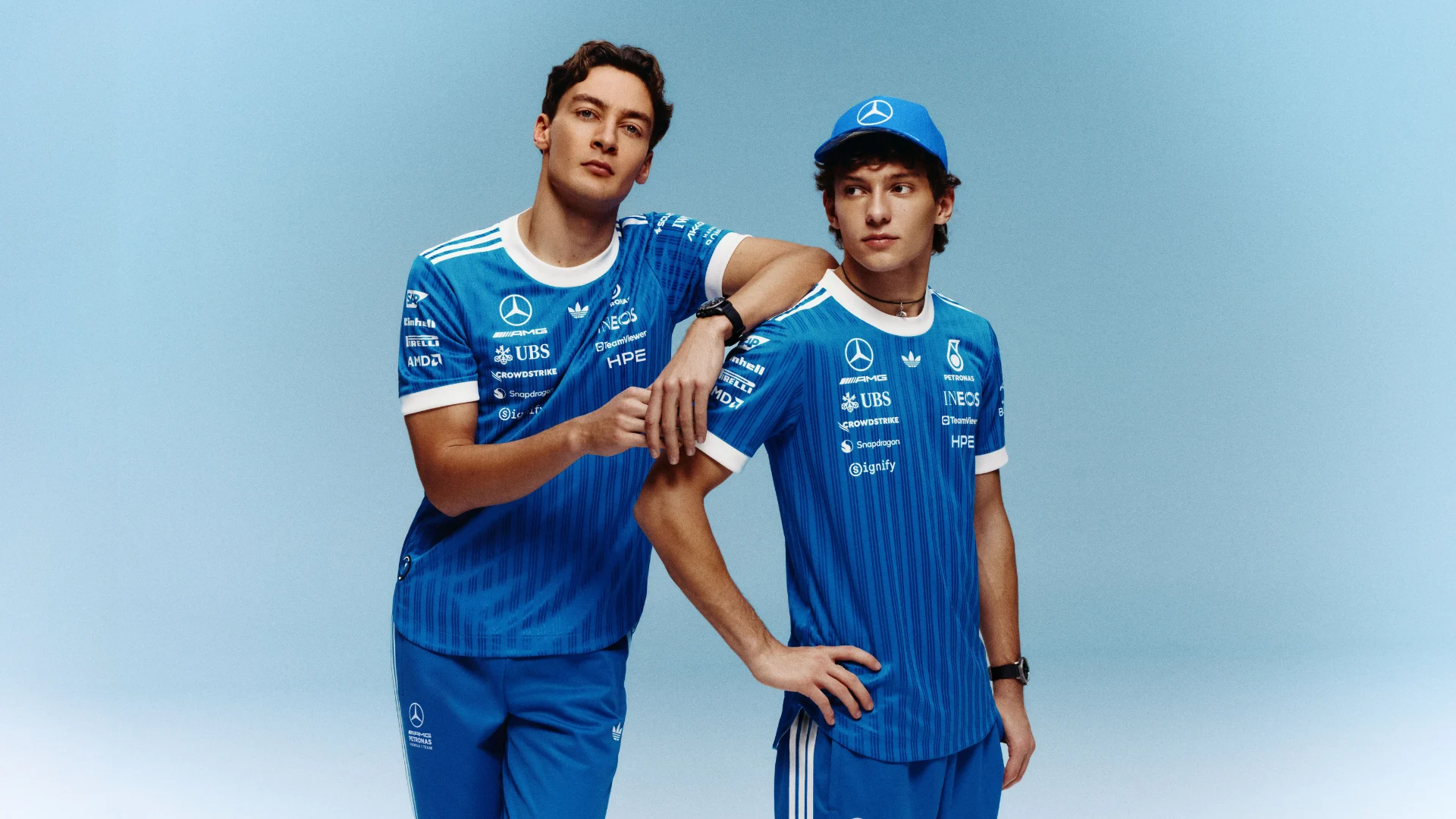
Shop: Blue Wonder Collection

Inspired by the 1955 high-speed car transporter, the collection celebrates a landmark piece of team history before the British Grand Prix at Silverstone.
OFFICIAL TEAM STORE