Skip to content

Mercedes-AMG F1 Engineers Major Sustainability Progress During 2025 Season

19 January 2026
10 Min Read

Our ambition is to become one of the most sustainable global professional sports teams and 2025 marked a significant year in our journey towards this goal.

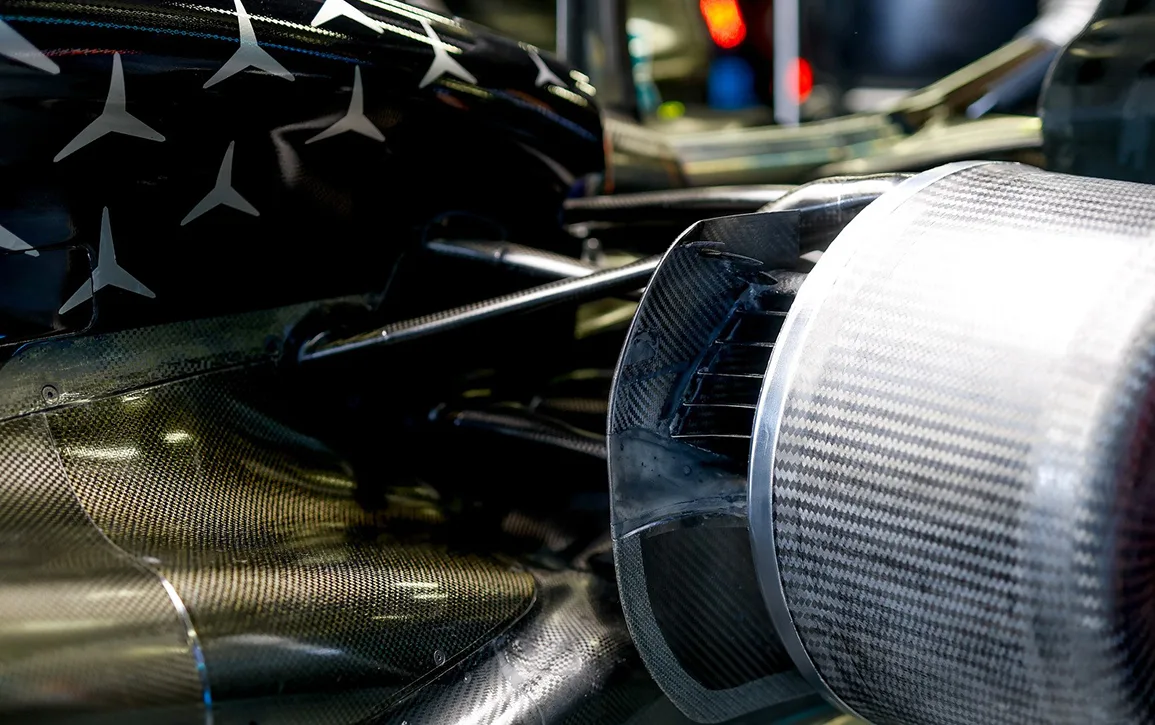
As a team, we are committed to engineering change on and off the track. On the car, the team debuted a bio-based carbon fibre composite on the rear brake duct wheel shields of the #63 W16 at the 2025 Azerbaijan Grand Prix.

The component subsequently raced over 7,000km following its debut at the Baku City Circuit, with the #63 W16 emerging victorious in Singapore, scoring a podium in Las Vegas and achieving top three finishes in the Sprint Races in Austin, São Paulo and Qatar.

This groundbreaking development was made possible through close collaboration with our carbon fibre composites supply chain and demonstrates this technology can withstand the extreme conditions of Formula One racing.

At home, our team members in Brackley played a key part in our carbon reduction progress in 2025, with 360,000 miles of commuting saved through an internal car sharing initiative – the equivalent of 99,000 laps of Silverstone Circuit.

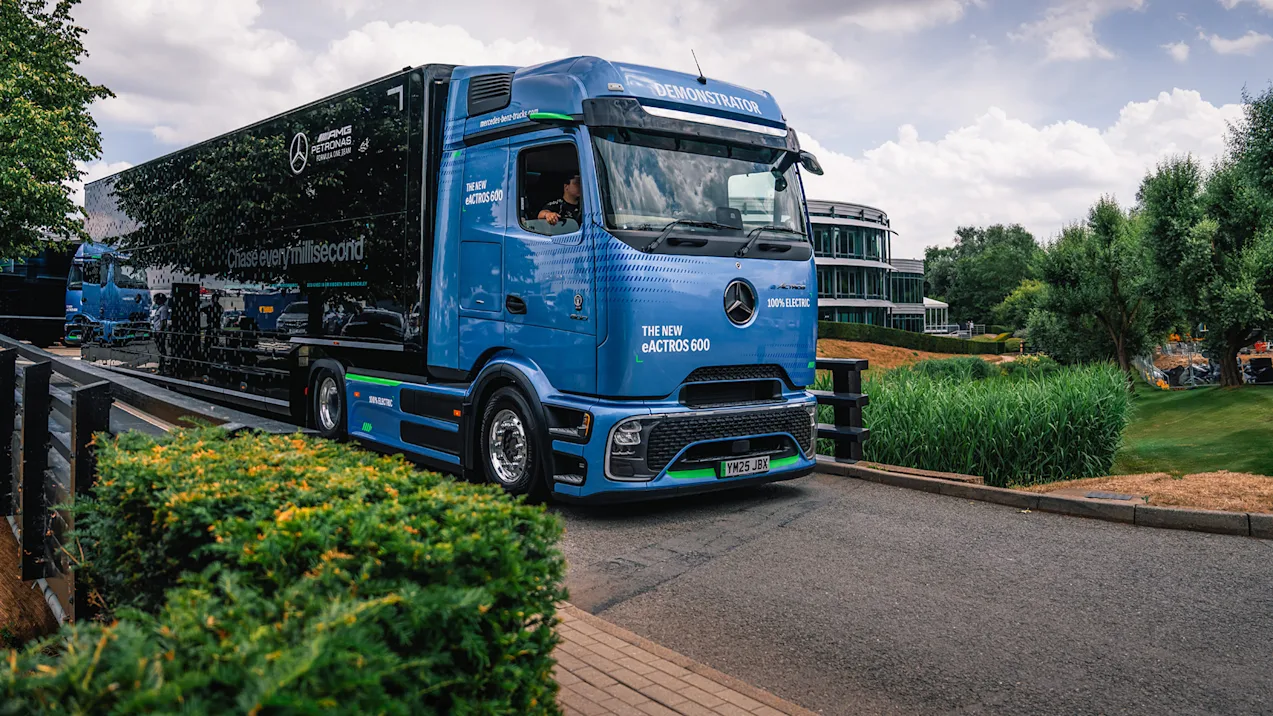
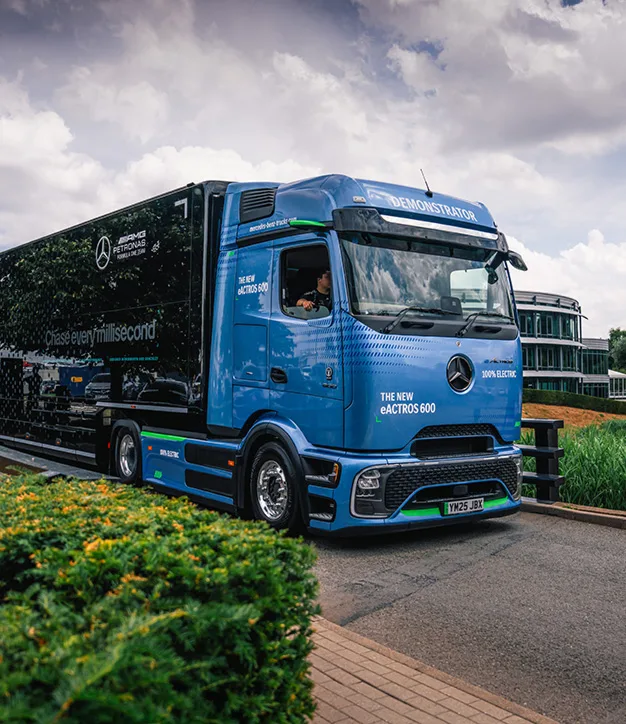
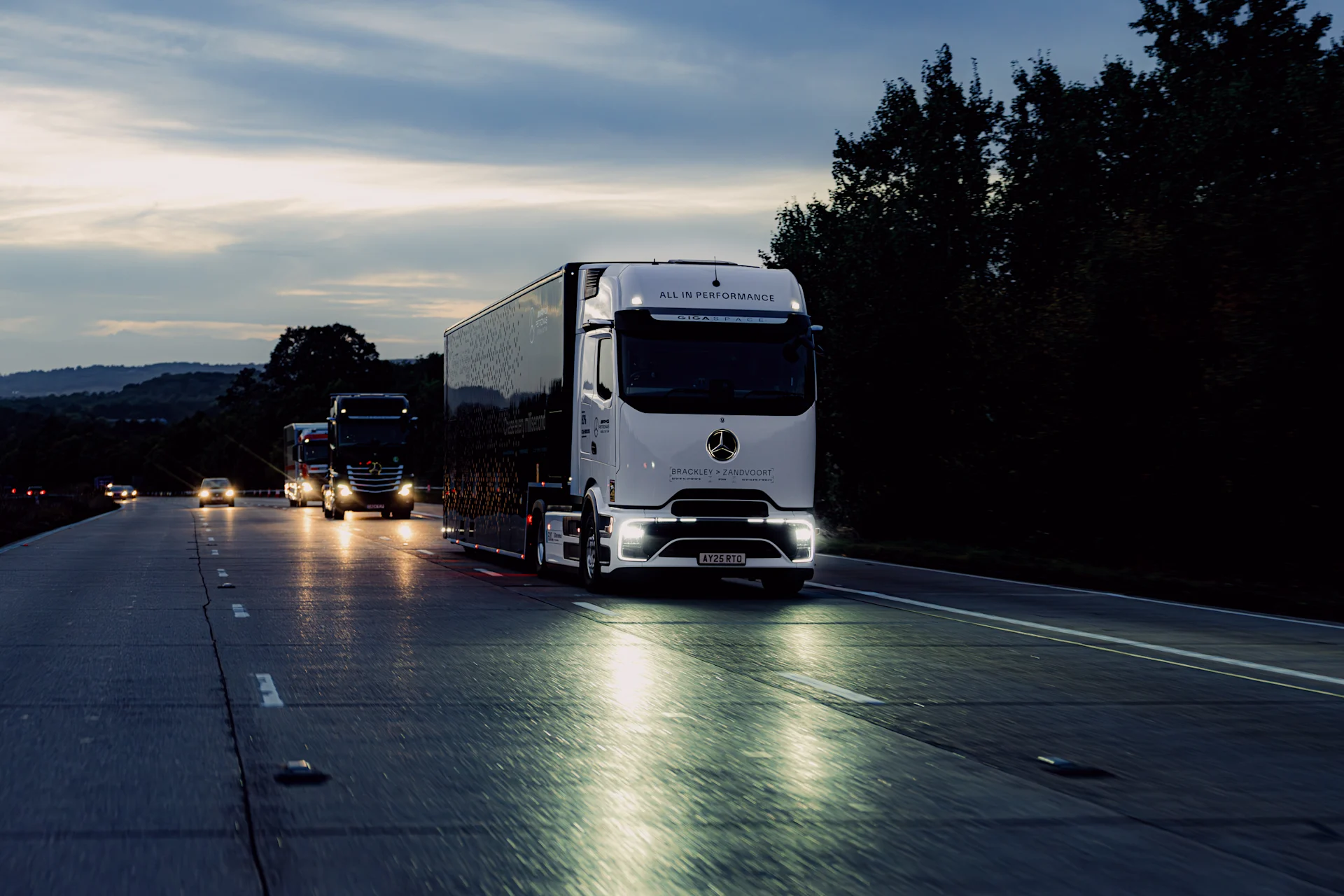
On the road, we transported our W16 race cars and their supporting equipment to the 2025 Dutch Grand Prix using an all-electric Mercedes-Benz Trucks eActros 600, among the first of its kind. The 673km journey from Brackley to Zandvoort came after an initial pilot at the 2025 British Grand Prix, making us the first team on the grid to use electric power to transport its race cars to a European race weekend.

We also continued to expand HVO100 coverage in the internal combustion engine trucks used to power our European season logistics. In 2025, over 410 tCO₂e was avoided by using biofuel instead of standard diesel4, equating to the sequestration2 power of approximately 33,600 fully grown mangrove trees in one year3.
Mangroves play a significant role in climate mitigation, acting as one of the most effective natural carbon sinks while protecting coastal ecosystems and biodiversity. They also played a key role in our world last year with the launch of the Blue Carbon Collective with our Title and Technical Partner PETRONAS, and inspiring our merchandise designs for the 2025 Miami Grand Prix.

Launched in June 2025, the Blue Carbon Collective funds mangrove restoration research in Brazil and Malaysia, reflecting our commitment to enhance and protect local environments. The team currently races in eight locations on the current calendar which are within 100km of a mangrove forest, including Singapore and São Paulo.

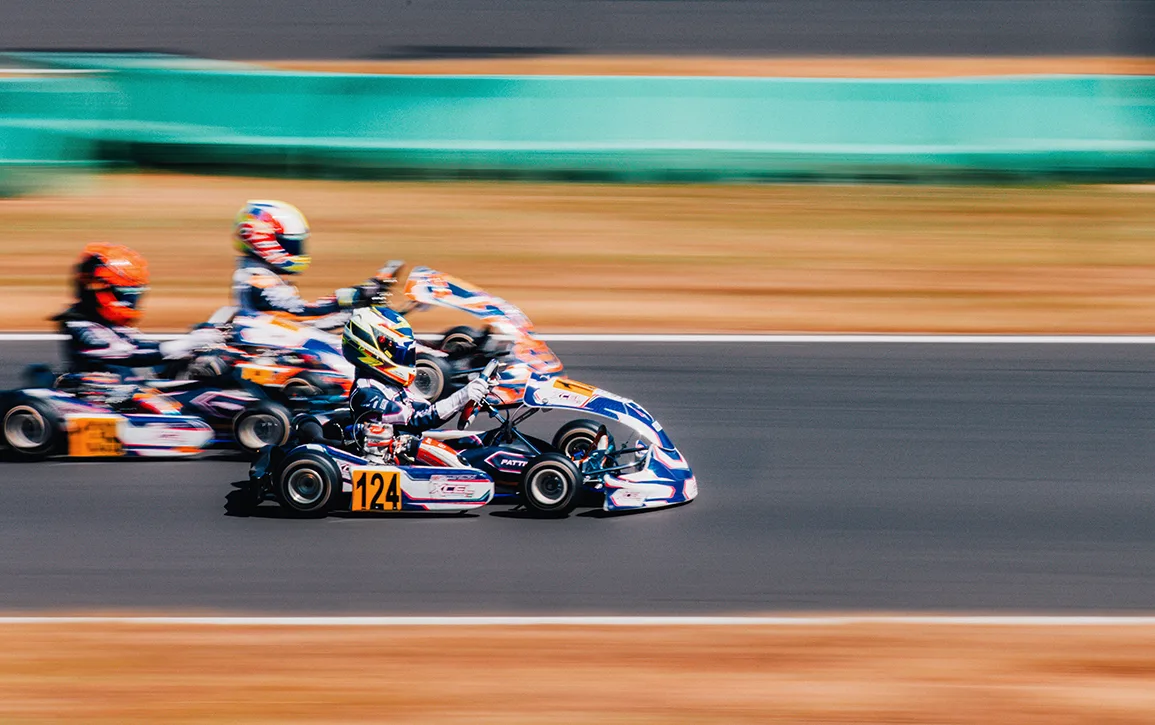
Closer to home, we collaborated with Motorsport UK (MSUK) to co-fund the use of sustainable fuel for the 2025 IAME Waterswift Restricted Cadet Class, one of the four classes within the British Karting Championships. Implemented from Round Three onwards, the fuel achieved a 55% reduction in emissions compared to its fossil fuel equivalent.

Our collaboration with MSUK not only demonstrates our commitment to create a more sustainable future for motorsport but also upholds our legacy of supporting up-and-coming racing talent, too.

Bradley Lord, Team Representative, Mercedes-AMG PETRONAS F1 Team

“We are proud of the progress made in 2025 across the environmental sustainability landscape and within the inclusion and social impact space. Our actions matter to us, and we know it matters to our fans. We are energised by what is to come in 2026 and determined to keep raising the bar – at home, on track, and in the communities that we live and race in.”

Alice Ashpitel, Head of Sustainability, Mercedes-AMG PETRONAS F1 Team

“As we look to the coming season, it’s rewarding to see the progress that our team made in 2025. Our progress would not have been possible without the contributions of our team members in Brackley and Brixworth, and the support of our partners and suppliers. There were many highlights in 2025 but the significance of applying a bio-based carbon fibre composite material to the W16 cannot be underestimated, and we are grateful to all of those involved. We look forward to 2026 as we work to shape a more sustainable future for Formula One.”

1 Bio-Based Resin Developed using a new resin that includes 30% bio-based material. Made possible through close collaboration with Syensqo.

2 Carbon Sequestration Carbon sequestration is the process of capturing, removing, and storing atmospheric carbon dioxide (CO2) to prevent it from contributing to further global warming. Sequestration can take place through natural capture methods (including trees and soils) and technological carbon capture processes; this results in the long-term storage of carbon in biological or geological “sinks”.

3 Mangrove Data Based on the assumption that one mangrove stores approximately 12.3kgCO2 per year over its lifetime.

4 HVO100 Biofuel HVO100 (Hydrotreated Vegetable Oil) is a second-generation drop-in biofuel that reduces lifecycle emissions up to 81% compared to standard diesel. As a drop-in fuel, HVO100 requires no engine modifications, enabling seamless integration into our logistics fleet. Data related to HVO100 calculated using the difference between the annual Well to Wheel (WTW) emissions for HVO100 and diesel (average biofuel blend) from the 2025 UK Government GHG Conversion Factors and the total annual fuel consumption across the 2025 European season for race and marketing trucks.

OFFICIAL TEAM STORE

Shop: 2026 Teamwear Collection

Year two of the three stripes and the three-pointed star. Click to shop the all-new 2026 adidas x Mercedes-AMG F1 Teamwear collection, and join our journey this season!
Shop Now